De smartphonewereld voelt vaak als een gigantisch slagveld dat wordt gedomineerd door een paar enorme namen. Appel, Samsung, Xiaomi, en Google halen de meeste krantenkoppen, advertenties, en winkelrekken. Maar onder dat glanzende oppervlak schuilt een heel ander ecosysteem vol creativiteit, experimenteel, en verrassend innovatieve kleinere smartphonemerken. Deze bedrijven verkopen mogelijk niet elk jaar honderden miljoenen apparaten, maar ze blijven de mobiele industrie vormgeven op manieren die veel consumenten nooit merken.
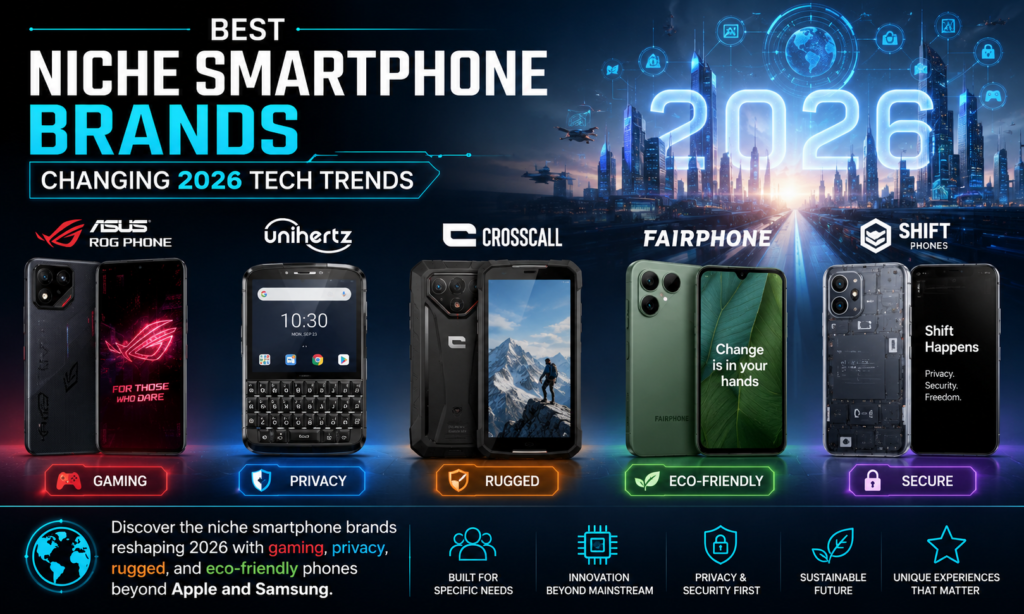
In 2026, niche-smartphonemerken worden belangrijker dan ooit. Stijgende smartphoneprijzen, groeiende frustratie over repetitieve vlaggenschipontwerpen, en de toenemende belangstelling voor privacy, duurzaamheid, gamen, en repareerbaarheid hebben deuren geopend voor kleinere fabrikanten. Terwijl reguliere merken de aantrekkingskracht van de massa najagen, deze kleinere bedrijven richten zich op zeer specifieke gebruikersgroepen. Sommigen creëren gamingmonsters met koelventilatoren, anderen ontwerpen milieuvriendelijke telefoons die thuis kunnen worden gerepareerd, en een paar doen zelfs fysieke toetsenborden herleven die jaren geleden verdwenen zijn.
Dat blijkt uit recente brancherapporten, De mondiale smartphonemarkt beleeft een van de zwaarste periodes in ruim tien jaar als gevolg van tekorten aan geheugenchips en stijgende productiekosten. Kleinere merken worden hard onder druk gezet, Toch laten bedrijven als Nothing en Fairphone nog steeds een indrukwekkende groei zien, omdat consumenten actief op zoek zijn naar alternatieven.
Het fascinerende deel? Deze nichemerken zijn niet langer slechts ‘goedkope alternatieven’. Velen bieden nu functies die reguliere bedrijven al lang geleden hebben verlaten. Hoofdtelefoonaansluitingen, verwijderbare onderdelen, ultracompacte ontwerpen, gaming-triggers, fysieke toetsenborden, en op privacy gerichte besturingssystemen keren terug dankzij kleinere innovators. Het lijkt bijna alsof de smartphone-industrie zich in twee werelden heeft gesplitst: gigantische bedrijven die op jacht zijn naar schaalgrootte, en kleinere merken die identiteit najagen.
Waarom kleine smartphonemerken er nog steeds toe doen 2026
De opkomst van de vraag van nicheconsumenten
Moderne smartphonegebruikers zijn niet langer tevreden met one-size-fits-all apparaten. Tien jaar geleden, bijna iedereen wilde hetzelfde: een groot scherm, een degelijke camera, en populaire apps. Vandaag, gebruikers verwachten apparaten die zijn afgestemd op hun levensstijl. Een gamer wil koelsystemen en schoudertriggers. Een zakelijke professional mist mogelijk fysieke toetsenborden. Outdoor-avonturiers hebben robuuste telefoons met enorme batterijen nodig. Op privacy gerichte gebruikers geven de voorkeur aan besturingssystemen die tracking minimaliseren. Deze verschuiving heeft een vruchtbare bodem gecreëerd voor niche-smartphonebedrijven.
Het interessante is dat reguliere merken zelden meer risico’s nemen. De meeste vlaggenschiptelefoons zien er nu vrijwel identiek uit. Dunne rechthoeken met enorme camerahobbels domineren de markt. Incrementele upgrades hebben radicale innovatie vervangen. Kleinere merken merkten deze kloof op en maakten er een kans van. Bedrijven als Unihertz produceren nu kleine smartphones en toetsenbordapparaten in BlackBerry-stijl, terwijl Fairphone zich sterk richt op repareerbaarheid en ethische inkoop.
Ook consumenten raken weer emotioneel gehecht aan uniciteit. Het dragen van een niche-smartphone voelt een beetje als het besturen van een aangepaste motorfiets in plaats van een in massa geproduceerde sedan. Het weerspiegelt de persoonlijkheid. In een tijdperk waarin bijna elk apparaat er hetzelfde uitziet, onderscheidend vermogen is waardevol geworden. Vooral jongere kopers houden van merken met een onconventionele identiteit, wat de snelle groei van bedrijven als Nothing verklaart. Counterpoint Research rapporteerde dat Niets a 25% stijging van het aantal verzendingen tijdens het eerste kwartaal 2026 ondanks de strijd op de mondiale markt.
Een andere belangrijke factor is prijsmoeheid. Premium vlaggenschiptelefoons overschrijden nu regelmatig $1,000, en veel consumenten weigeren simpelweg zoveel uit te geven. Nichemerken leveren vaak verrassend capabele apparaten tegen veel lagere prijzen. Ze kunnen de camerakwaliteit of softwarepolijsten opofferen, maar ze compenseren dit met gespecialiseerde kenmerken die reguliere merken negeren.
Waarom consumenten de reguliere telefoons beu zijn
Veel smartphonegebruikers voelen zich gevangen in een eindeloze cyclus van repetitieve upgrades. Elk jaar belooft “de beste camera ooit” of “snellere AI-functies,Toch verandert de ervaring in de echte wereld nauwelijks. Consumenten beginnen het te merken. De opwinding rond de lancering van smartphones is vervaagd vergeleken met het explosieve innovatietijdperk daartussen 2010 En 2020.
Deze verveling komt nichemerken enorm ten goede. Kleinere fabrikanten experimenteren met ideeën die gigantische bedrijven te riskant vinden. RedMagic voegt ingebouwde koelventilatoren toe aan gamingtelefoons. Unihertz brengt kleine smartphones uit die klein genoeg zijn om in een zak te verdwijnen. Fairphone maakt modulaire apparaten die gebruikers zelf kunnen repareren met eenvoudig gereedschap. Jolla richt zich op privacy en onafhankelijkheid van Amerikaanse en Chinese software-ecosystemen.
Een ander probleem dat reguliere merken schaadt, is het verdwijnen van geliefde functies. Veel consumenten willen nog steeds koptelefoonaansluitingen, uitbreidbare opslag, en compacte telefoons. Apple en Samsung hebben deze functies grotendeels verlaten in hun zoektocht naar dunnere ontwerpen en draadloze ecosystemen. Kleinere merken stapten in die kloof, zoals onafhankelijke boekwinkels die naast gigantische winkelketens overleefden. Ze bedienen gepassioneerde gemeenschappen in plaats van een groot publiek.
Er is ook sprake van een groeiend scepticisme tegenover big tech-ecosystemen. Sommige gebruikers houden er niet van hoe sterk geïntegreerde reguliere apparaten zijn geworden met reclame, cloud-abonnementen, en datatracking. Op privacy gerichte merken zoals Jolla trekken gebruikers aan die meer controle over hun digitale leven willen. Terwijl dit publiek relatief klein blijft, ze zijn buitengewoon loyaal.
Ironisch genoeg, hoe meer gestandaardiseerde reguliere smartphones worden, hoe waardevoller de niche-diversiteit voelt. Smartphones zijn persoonlijke voorwerpen die mensen elke dag gebruiken. Gebruikers willen steeds vaker apparaten die hun waarden weerspiegelen, hobby's, en identiteiten in plaats van generieke trends in bedrijfsontwerp.
De mondiale smartphonemarkt in 2026
Stijgende prijzen en uitdagingen in de toeleveringsketen
De smartphone-industrie in 2026 kampt met ernstige turbulentie. Volgens IDC en Counterpoint Research, De wereldwijde smartphone-leveringen zullen naar verwachting het laagste niveau in meer dan tien jaar bereiken als gevolg van ernstige tekorten aan geheugenchips en stijgende productiekosten. Analisten verwachten dat de gemiddelde verkoopprijzen van smartphones dit jaar aanzienlijk zullen stijgen.
Voor kleinere smartphonemerken, deze omgeving is zowel gevaarlijk als vreemd nuttig. Aan de ene kant, Stijgende componentkosten bedreigen het voortbestaan omdat nichemerken de enorme supply chain-kracht van Apple of Samsung ontberen. Grotere bedrijven kunnen betere prijzen onderhandelen en de levering van chips gemakkelijker veiligstellen. Kleinere fabrikanten hebben vaak moeite om te concurreren om componenten tijdens tekorten.
Anderzijds, marktverstoring schept kansen voor creatieve spelers. Consumenten die met hogere vlaggenschipprijzen worden geconfronteerd, zijn meer bereid alternatieven te verkennen. Veel nichemerken overleven door zich op zeer specifieke gemeenschappen te richten in plaats van te proberen de hele markt te domineren. Een bedrijf dat honderdduizenden apparaten aan trouwe fans verkoopt, kan winstgevend blijven zonder rechtstreeks te concurreren met de gigantische omvang van Apple.
De smartphonemarkt ervaart ook langzamere vervangingscycli. Consumenten houden telefoons langer omdat jaarlijkse verbeteringen minder betekenisvol aanvoelen. Deze trend is feitelijk in het voordeel van nichemerken die zich richten op duurzaamheid en repareerbaarheid. Fairphone, Bijvoorbeeld, bouwde zijn hele bedrijfsmodel rond langetermijneigendom. Gebruikers kunnen batterijen vervangen, camera's, en schermen in plaats van geheel nieuwe apparaten te kopen. Die aanpak voelt plotseling ongelooflijk relevant tijdens economische onzekerheid.
Hoe kleinere merken overleven
Niche-smartphonebedrijven overleven door specialisatie. In plaats van iedereen tevreden te willen stellen, ze richten zich intensief op kleinere doelgroepen met specifieke behoeften. Deze strategie lijkt op boetiek-coffeeshops die concurreren met gigantische ketens door unieke ervaringen aan te bieden in plaats van gemak op de massamarkt.
Het beste voorbeeld is het gaming-smartphonesegment. Merken als RedMagic transformeerden gamingtelefoons tot een hele subcultuur. Deze apparaten hebben een agressief ontwerp, geavanceerde koelsystemen, aanpasbare RGB-verlichting, en aanraakgevoelige schoudertriggers. Reguliere bedrijven zetten zich zelden volledig in voor gaminghardware, omdat het publiek relatief nichemarkt blijft. RedMagic omarmde het volledig en bouwde een loyale wereldwijde fanbase op.
Een andere overlevingsstrategie betreft online communities. Kleinere smartphonemerken cultiveren vaak gepassioneerde fanbases via forums, Onenigheidsgroepen, en sociale media. Deze gemeenschappen worden onbetaalde marketeers. Enthousiastelingen bespreken graag unieke apparaten omdat ze zich onderscheiden van reguliere producten. Mond-tot-mondreclame helpt kleinere bedrijven bij het compenseren van beperkte advertentiebudgetten.
Regionale focus is ook van belang. Sommige nichemerken presteren sterk in specifieke landen in plaats van wereldwijd. Fairphone kent vooral succes in Europa, waar duurzaamheidskwesties sterk weerklank vinden bij de consument. De Indiase smartphonemarkten bevatten nog steeds talloze kleinere onlinegerichte merken die concurreren in budgetsegmenten. Chinese nichefabrikanten domineren de categorieën gaming en robuuste apparaten.
Uiteindelijk, overleving hangt af van differentiatie. Kleine smartphonemerken kunnen niet winnen door Apple of Samsung te kopiëren. Ze slagen alleen als ze ervaringen bieden die reguliere concurrenten weigeren te bieden.
Populaire niche-smartphonemerken in Europa
Fairphone en de duurzaamheidsbeweging
Fairphone is een van de meest fascinerende smartphonemerken in Europa geworden omdat het de wegwerpcultuur van de industrie uitdaagt. In plaats van constante upgrades aan te moedigen, Fairphone bevordert een lange levensduur, ethische inkoop, en herstelbaarheid. In veel opzichten, het bedrijf voelt minder als een technologiefabrikant en meer als een duurzaamheidsbeweging verpakt in een smartphonebedrijf.
De Fairphone 6 kreeg veel aandacht in 2026 dankzij het modulaire ontwerp en de lange beloften voor softwareondersteuning. Volgens Android Central, Fairphone heeft een verbazingwekkende opname gemaakt 116% toename van de verzending ondanks de bredere daling van de smartphonemarkt. Die groei laat zien hoe de prioriteiten van de consument veranderen. Kopers geven steeds meer om de impact op het milieu, recht op reparatie beleid, en transparante productiepraktijken.
Een van de grootste voordelen van Fairphone is emotioneel vertrouwen. Veel consumenten voelen zich ongemakkelijk bij het om de twee jaar vervangen van dure apparaten, simpelweg omdat de batterijen zwakker worden of het scherm barst. Fairphone geeft gebruikers weer controle. Componenten kunnen afzonderlijk worden vervangen met basisgereedschap, waardoor de telefoon meer als een langetermijninvestering voelt dan als wegwerptechnologie.
Het bedrijf profiteert ook van de toenemende regeldruk in Europa op het gebied van repareerbaarheid en duurzaamheid. Overheden moedigen fabrikanten steeds meer aan om de levensduur van producten te verlengen en elektronisch afval te verminderen. Fairphone positioneerde zichzelf perfect voor deze culturele verschuiving, jaren voordat grotere bedrijven duurzaamheid serieus begonnen te bespreken.
Jolla en op privacy gerichte smartphones
Jolla vertegenwoordigt een andere fascinerende hoek van de niche-smartphonewereld. Gevestigd in Finland, het bedrijf ontwikkelde Sailfish OS, een alternatief mobiel besturingssysteem dat de nadruk legt op privacy en onafhankelijkheid. In tegenstelling tot Android of iOS, Sailfish vermijdt diepe integratie met grote Amerikaanse tech-ecosystemen.
Privacybewuste gebruikers waarderen Jolla omdat het iets biedt dat steeds zeldzamer wordt: digitale autonomie. Het bedrijf richt zich op gebruikers die zich ongemakkelijk voelen bij uitgebreide gegevensverzamelingspraktijken van reguliere platforms. Terwijl het marktaandeel van Jolla klein blijft, de filosofie ervan vindt een sterke weerklank onder cybersecurity-enthousiastelingen, ontwikkelaars, en privacyvoorvechters.
Wat Jolla bijzonder interessant maakt, is haar weigering om rechtstreeks te concurreren met reguliere reuzen. In plaats van massale adoptie na te jagen, het bedrijf richt zich op een zeer loyaal nichepubliek. Deze strategie lijkt op ambachtelijk vakmanschap vergeleken met productie op fabrieksschaal. Jolla-apparaten mogen nooit de verkoopgrafieken domineren, maar ze behouden het culturele belang door te bewijzen dat alternatieve ecosystemen nog steeds kunnen bestaan.
De opkomst van op privacy gerichte technologiediscussies in Europa helpt ook merken als Jolla. Wat betreft omgevingsbewaking, het verzamelen van gegevens, en digitale monopolies groeien, kleinere privacygerichte bedrijven lijken ineens relevanter dan ooit.
Unieke smartphonemerken in China
RedMagic en de gaming-smartphoneboom
China blijft het mondiale centrum voor smartphone-experimenten, en RedMagic laat perfect zien waarom. Oorspronkelijk opgericht als een op gaming gericht submerk, RedMagic is uitgegroeid tot een van de meest herkenbare niche-smartphonebedrijven ter wereld.
Gaming-smartphones vormen een vreemde maar fascinerende hoek van de industrie. Voor sommige consumenten, ze lijken buitensporig of kinderachtig. Voor mobiele gamers, ze vertegenwoordigen serieuze prestatietools. RedMagic-telefoons zijn voorzien van actieve koelventilatoren, displays met ultrahoge verversingssnelheid, schouder triggers, RGB-verlichting, en enorme batterijen die speciaal zijn ontworpen voor competitieve gamesessies.
De mobiele gaming-industrie zelf explodeerde wereldwijd, gedreven door esports-titels zoals PUBG Mobile, Call of Duty-mobiel, en eer van koningen. Hierdoor ontstond er vraag naar apparaten die specifiek waren geoptimaliseerd voor gamingprestaties. Reguliere vlaggenschiptelefoons kunnen zeker games draaien, maar op gaming gerichte apparaten geven prioriteit aan duurzame prestaties en thermisch beheer op een manier die standaardtelefoons zelden doen.
RedMagic profiteert ook van een gedurfde identiteit. Het merk omarmt futuristische esthetiek in plaats van deze te verbergen. De apparaten zien er onbeschaamd agressief uit, bijna als sciencefictiongadgets. In een markt vol minimalistische glasplaten, die visuele persoonlijkheid zorgt ervoor dat het bedrijf meteen opvalt.
Unihertz- en compacte toetsenbordtelefoons
Unihertz is misschien wel het ultieme voorbeeld van een bedrijf dat overleeft dankzij zijn unieke karakter. Het merk maakt apparaten die reguliere fabrikanten jaren geleden hebben verlaten: kleine smartphones en fysieke toetsenbordtelefoons. De Titan-serie lijkt op klassieke BlackBerry-toestellen, terwijl de Jelly-lijn verrassend capabele ultracompacte smartphones biedt.
Voor veel gebruikers, deze ontwerpen roepen nostalgie op. Fysieke toetsenborden domineerden ooit de professionele communicatie voordat touchscreen-smartphones het volledig overnamen. Unihertz realiseerde zich dat sommige mensen nog steeds tactiele typervaringen missen. In plaats van toetsenborden als verouderde relikwieën te behandelen, het bedrijf heeft ze omgezet in premium nichefuncties.
Het compacte telefoonsegment vertelt een soortgelijk verhaal. Moderne smartphones werden steeds groter, frustrerende gebruikers die de voorkeur geven aan draagbaarheid. Reguliere fabrikanten hebben kleine telefoons grotendeels verlaten omdat grotere beeldschermen de verkoop domineren. Unihertz zag kansen waar grotere bedrijven irrelevantie zagen.
Deze aanpak laat een cruciale les zien over nichemarkten: een klein publiek kan bedrijven nog steeds overeind houden als de concurrentie volledig verdwijnt. Unihertz heeft geen verkoopvolumes op Apple-niveau nodig. Er zijn alleen voldoende loyale gebruikers nodig die op zoek zijn naar ervaringen die niemand anders biedt.
Meizu's terugkeer naar het premiumsegment
Meizu beleefde een turbulente geschiedenis vol heruitvindingen, eigendom verandert, en de fluctuerende marktrelevantie. Toch blijft het merk de aandacht trekken van smartphoneliefhebbers vanwege zijn elegante softwarefilosofie en premium hardware-ambities.
In tegenstelling tot agressief experimentele bedrijven zoals RedMagic, Meizu richt zich op verfijning. Het bedrijf legt vaak de nadruk op industrieel design, schone gebruikersinterfaces, en evenwichtige prestaties in plaats van extreme specificaties. Deze subtiliteit spreekt gebruikers aan die uitgeput zijn door flitsende marketing en overdreven gaming-esthetiek.
De Chinese smartphonemarkten zijn brutaal concurrerend, waardoor het voortbestaan van Meizu op zichzelf al indrukwekkend is. Overleven vereist voortdurende aanpassing, omdat consumenten innovatie met een meedogenloze snelheid verwachten. Terwijl Meizu niet langer de krantenkoppen als Xiaomi of Oppo domineert, het behoudt een culturele betekenis onder technologieliefhebbers die alternatieve Android-ervaringen waarderen.
Opkomende smartphonemerken in India
Lava's poging om de Indiase productie nieuw leven in te blazen
India blijft een van de grootste smartphonemarkten ter wereld, toch worstelen binnenlandse smartphonemerken met de Chinese concurrentie. Bedrijven als Lava vertegenwoordigen voortdurende pogingen om de lokale identiteit van de smartphoneproductie in India opnieuw op te bouwen.
Lava richt zich sterk op betaalbaarheid en lokale productieverhalen. Deze strategie vindt weerklank bij consumenten die geïnteresseerd zijn in het ondersteunen van Indiase productie-initiatieven. Echter, concurreren met enorme Chinese toeleveringsketens blijft buitengewoon moeilijk. Merken van Chinese oorsprong blijven de Indiase smartphonemarkt domineren door middel van agressieve prijzen en uitgebreide offline retailnetwerken.
Nog steeds, De volharding van Lava is van belang omdat het bredere economische ambities vertegenwoordigt die verder gaan dan alleen de verkoop van smartphones. Regeringen moedigen steeds meer de binnenlandse elektronicaproductie aan om de afhankelijkheid van import te verminderen en lokale industrieën te versterken. Kleinere smartphonemerken overleven soms omdat ze aansluiten bij nationale industriële strategieën.
Ook de Indiase consument blijft zeer prijsgevoelig, het creëren van kansen voor kleinere online-gerichte merken die waardegerichte apparaten aanbieden. De budgetsegmenten blijven intens concurrerend, maar nichedifferentiatie door middel van software-ervaringen of gelokaliseerde diensten kan nog steeds een trouw publiek aantrekken.
Niche-budgetmerken die online concurreren
De Indiase online smartphonemarkt gedraagt zich bijna als een digitaal slagveld waar voortdurend kleinere merken verschijnen en verdwijnen. Budgetgerichte bedrijven overleven door middel van flash-verkopen, influencer-marketing, en agressieve specificaties in plaats van traditionele retaildominantie.
Deze omgeving beloont snelheid en aanpassingsvermogen. Kleinere merken kunnen soms sneller op trends reageren dan grote bedrijven die gebukt gaan onder grotere organisatiestructuren. Socialmediamarketing maakt het speelveld ook enigszins gelijk, omdat virale aandacht obscure bedrijven tijdelijk in de mainstream zichtbaarheid kan brengen.
Interessant genoeg, Veel mondiale nichemerken testen producten in India omdat de enorme gebruikersbasis van het land snel waardevolle feedback oplevert. Consumenten geven daar vaak prioriteit aan de levensduur van de batterij, duurzaamheid, en betaalbaarheid boven luxe branding, waardoor India een ideale proeftuin is voor experimentele apparaten.
Robuuste smartphonemerken krijgen aandacht
Blackview- en outdoor-apparaten
Robuuste smartphones blijven een van de meest onderschatte segmenten in de hele branche. Merken zoals Blackview ontwerpen apparaten die zijn gebouwd voor extreme omstandigheden in plaats van voor elegantie. Massieve batterijen, versterkte kozijnen, waterdicht maken, en thermische weerstand definiëren deze producten.
Voor bouwvakkers, reizigers, wandelaars, en buitenliefhebbers, robuuste telefoons zijn praktisch zinvol. Reguliere vlaggenschipapparaten geven prioriteit aan dunheid en esthetiek, wordt daardoor vaak kwetsbaar. Robuuste telefoons omarmen duurzaamheid onbeschaamd.
Blackview kreeg deels de aandacht omdat het agressief experimenteerde met ongebruikelijke functies. Sommige modellen bevatten gigantische batterijen, projectoren, nachtzichtcamera's, of kampeergerichte gereedschappen. Deze apparaten voelen bijna aan als overlevingsuitrusting, vermomd als smartphones.
De markt voor robuuste smartphones laat zien hoe specialisatie kansen creëert. Terwijl reguliere consumenten dergelijke apparaten misschien nooit zullen kopen, nichedoelgroepen waarderen producten die speciaal zijn ontworpen voor veeleisende omgevingen.
Doogee en enorme batterijtelefoons
Doogee bezet een vergelijkbare niche die sterk gericht is op het uithoudingsvermogen van de batterij en robuust gebruiksgemak. Sommige Doogee-telefoons zijn voorzien van enorme batterijen die meerdere dagen meegaan. In een wereld die geobsedeerd is door dunne ontwerpen, gigantische batterijtelefoons voelen verfrissend praktisch aan.
Batterijangst blijft een van de meest universele smartphonefrustraties. Reguliere fabrikanten hebben de laadsnelheden dramatisch verbeterd, toch blijft de levensduur van de batterij zelf vaak middelmatig, omdat slanke ontwerpen de capaciteit beperken. Robuuste merken negeren simpelweg modetrends en geven prioriteit aan uithoudingsvermogen.
Voor reizigers, externe werknemers, of buitengebruikers, deze aanpak is volkomen logisch. Een telefoon die drie of vier dagen meegaat, verandert het gedrag dramatisch vergeleken met dagelijkse oplaadroutines. Deze apparaten offeren elegantie op voor betrouwbaarheid, wat veel gebruikers graag accepteren.
De toekomst van kleine smartphonemerken
Kunnen ze overleven tegen technische reuzen??
De toekomst van niche-smartphonemerken blijft onzeker maar verrassend hoopvol. Op papier, overleven lijkt bijna onmogelijk. Apple en Samsung domineren de mondiale distributie, marketing, software-ecosystemen, en inkoop van componenten. Stijgende productiekosten vormen een voortdurende bedreiging voor kleinere concurrenten.
Toch blijven nichemerken overleven omdat technologiemarkten cultureel gefragmenteerd raken. Consumenten zoeken steeds vaker naar apparaten die de persoonlijke identiteit weerspiegelen in plaats van naar generieke statussymbolen. Deze versnippering komt gespecialiseerde bedrijven enorm ten goede.
Gaming-telefoons, op privacy gerichte apparaten, repareerbare smartphones, compacte telefoons, robuuste apparaten, en experimentele opvouwbare producten vertegenwoordigen allemaal een publiek dat reguliere bedrijven niet tegelijkertijd volledig kunnen bevredigen. Kleinere merken gedijen door deze gaten te vullen.
De smartphone-industrie lijkt ook een volwassenheidsfase in te gaan, vergelijkbaar met die van de auto-industrie of de mode-industrie. Zodra industrieën volwassen zijn, diversiteit neemt vaak toe omdat emotionele branding en levensstijlidentiteit belangrijker worden dan alleen ruwe technische verbetering.
De recente groei van Nothing demonstreert dit perfect. Het bedrijf bouwde zijn populariteit grotendeels op door een onderscheidend ontwerp en door de gemeenschap aangestuurde branding, in plaats van door overweldigende hardware-superioriteit. Consumenten geloven steeds meer in verhalen en filosofieën, niet alleen specificaties.
Kleine smartphonemerken zullen waarschijnlijk nooit meer het mondiale marktaandeel domineren. Maar dominantie doet er misschien niet meer toe. Overleven, identiteit, en loyale gemeenschappen zouden waardevoller kunnen blijken dan alleen schaalgrootte.
Conclusie
De mondiale smartphonemarkt in 2026 voelt zich vreemd verdeeld tussen consolidatie en creativiteit. Gigantische bedrijven domineren de totale omzet, terwijl kleinere nichemerken stilletjes experimenteren met ideeën die reguliere fabrikanten al lang geleden hebben verlaten. Dit contrast maakt de smartphone-industrie veel interessanter dan alleen de verzendcijfers doen vermoeden.
Bedrijven als Fairphone, Rode Magie, Unihertz, Zwartzicht, Jolla, en Niets bewijst dat er nog steeds ruimte is voor individualiteit in mobiele technologie. Ze slagen daar niet in door Apple of Samsung te kopiëren, maar door een publiek te bedienen met zeer specifieke behoeften en passies. Sommige gebruikers willen duurzaamheid. Anderen hunkeren naar spelprestaties, privacy, duurzaamheid, compacte ontwerpen, of fysieke toetsenborden.
Terwijl smartphone-innovatie op mainstream-niveau vertraagt, nichemerken worden steeds belangrijker omdat ze experimenten levend houden. Ze herinneren consumenten eraan dat smartphones nog steeds persoonlijk kunnen aanvoelen, ongebruikelijk, en eerder spannende dan verwisselbare glazen rechthoeken.
De toekomst kan financieel gezien toebehoren aan gigantische ecosystemen, maar cultureel, kleinere smartphonemerken blijven de ziel van de industrie vormgeven.
FAQ's
1. Wat zijn niche-smartphonemerken?
Niche-smartphonemerken zijn kleinere mobieletelefoonbedrijven die zich richten op specifieke gebruikersgroepen in plaats van op het massamarktpubliek. Voorbeelden hiervan zijn fabrikanten van gamingtelefoons, privacygerichte merken, robuuste telefoonbedrijven, en duurzame smartphonefabrikanten.
2. In welk niche-smartphonemerk groeit het snelst? 2026?
Recente rapporten suggereren dat merken als Nothing en Fairphone een sterke groei doormaken dankzij unieke branding, duurzaamheidsinspanningen, en de vraag van consumenten naar alternatieven voor reguliere smartphones.
3. Zijn gaming-smartphones het kopen waard??
Gaming-smartphones kunnen uitstekend zijn voor gebruikers die veel mobiele games spelen. Vaak zijn ze voorzien van geavanceerde koelsystemen, grote batterijen, schouder triggers, en beeldschermen met een hoge vernieuwingsfrequentie die de spelprestaties verbeteren.
4. Waarom kopen mensen robuuste smartphones??
Robuuste smartphones zijn aantrekkelijk voor gebruikers die buitenshuis werken of vaak reizen, omdat ze een grotere duurzaamheid bieden, waterbestendigheid, en een veel langere batterijduur dan typische vlaggenschiptelefoons.
5. Kunnen kleine smartphonemerken op de lange termijn overleven??
Veel kleine merken kunnen overleven door zich te concentreren op loyale nichegemeenschappen in plaats van rechtstreeks te concurreren met Apple of Samsung. Specialisatie en sterke merkidentiteit helpen deze bedrijven relevant te blijven.