Mi az a mobil LCD kijelző?
Definíció és alapfogalom
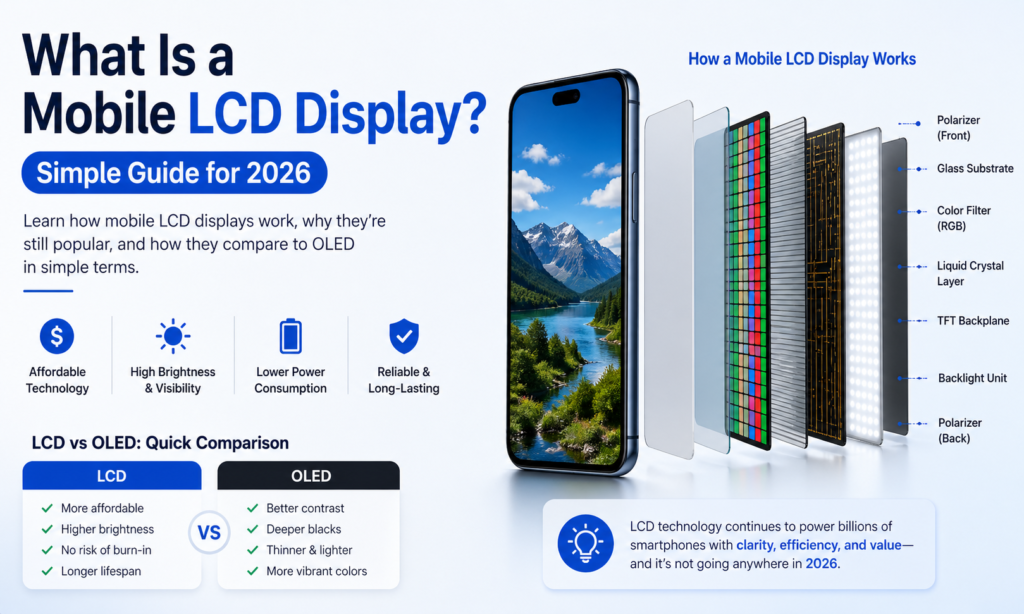
Ha valaha is órákig bámulta a telefonját – görgetés, videók nézése, vagy üzenetekre válaszolva – az eszköz egyik legfontosabb technológiai elemével kommunikált: a LCD kijelző. Az LCD jelentése Folyékony kristály kijelző, és évtizedek óta ez a mobilképernyők gerince. Tekintse úgy, mint egy gondosan megtervezett rétegek szendvicsére, ahol folyadékkristályok ülnek az üvegtáblák között, és szabályozzák, hogy a fény hogyan halad át a képek létrehozásához.
De itt van az érdekes rész: az LCD-képernyők nem bocsátanak ki maguktól fényt. Helyette, támaszkodnak a háttérvilágítás. Képzelj el egy színházi színpadot: a háttérvilágítás a reflektorfény, a folyadékkristályok pedig azok az előadók, akik alakítják a látottakat. A fényforrás nélkül, a képernyő teljesen sötét maradna.
Még be is 2026, Az LCD technológia nem tűnt a homályba. Az okostelefonok nagy részét továbbra is ez látja el, különösen a középkategóriás és olcsó készülékekben. Ez azért van, mert egyensúlyt teremt a költségek között, megbízhatóság, és olyan teljesítmény, amelyet sok gyártó egyszerűen nem hagyhat figyelmen kívül.
Miért használják még mindig széles körben az LCD-t?
Lehet, hogy kíváncsi: az olyan újabb technológiákkal, mint az OLED dominálnak a címlapok, miért számít még mindig az LCD? A válasz meglepően praktikus –költséghatékonyság és skálázhatóság. A friss piaci adatok szerint, Az LCD továbbra is számol felett 43% világszerte, meghaladja 1.28 milliárd egységben 2026 .
Ez nem kis szám – hatalmas. Ez azt mutatja, hogy míg a prémium telefonok az OLED felé haladnak, a világ lakosságának többsége még mindig LCD-alapú eszközökre támaszkodik. A gyártók előnyben részesítik az LCD-t, mert olcsóbb az előállítása, könnyebben méretezhető, és bizonyos körülmények között tartósabb.
Egyszerűen fogalmazva, Az LCD nem elavult – az stratégiailag elengedhetetlen. Olyan, mint egy megbízható családi autó: talán nem feltűnő, de megbízható, megfizethető, és mindenhol.
Hogyan működnek az LCD képernyők az okostelefonokban
A folyadékkristályok szerepe
Bontsuk fel úgy, hogy valóban van értelme. LCD képernyő belsejében, milliónyi apró sejtet találsz folyadékkristályokkal. Ezek a kristályok különlegesek – el tudnak csavarodni és igazodni, amikor áramot alkalmaznak. Ez a mozgás szabályozza, hogy mennyi fény haladjon át az egyes pixeleken.
Gondoljon minden képpontra úgy, mint egy apró ablakra. Amikor a kristály megcsavarodik, vagy átengedi a fényt, vagy elzárja. Szorozzuk meg ezt milliókkal, és hirtelen teljes képet kapsz – videókat, fényképeket, szöveg – mindez valós időben jelenik meg.
Ez a folyamat hihetetlenül gyorsan megy végbe, ezért nem vesz észre semmilyen késést, amikor görget vagy videókat néz. Ez egy zökkenőmentes illúzió, amelyet a fizika és a precíziós tervezés hajt.
A háttérvilágítás és a színszűrők magyarázata
Mivel a folyadékkristályok nem bocsátanak ki fényt, Az LCD képernyőkhöz a háttérvilágítás, általában LED-ekből készülnek. Ez a háttérvilágítás átvilágít a kristályrétegen, majd áthalad rajta színszűrők-piros, zöld, és kék.
Az egyes szubpixelek áteresztőképességének beállításával, a kijelző milliónyi színt hoz létre. Hasonló a festékek keveréséhez, hanem pigmentek helyett, minden a fény intenzitásáról szól.
Az eredmény? Egy fényes, színes képernyő, amely kültéri környezetben is jól működik. Ez az a terület, ahol az LCD gyakran jobban teljesít, mint az OLED – különösen közvetlen napfényben.
Az LCD-kijelzők típusai a mobiltelefonokban
TFT LCD
TFT (Vékony film tranzisztor) Az LCD az egyik legkorábbi és legalapvetőbb típusú LCD technológia, amelyet okostelefonokban használnak. Tranzisztorok mátrixát használja az egyes pixelek egyenkénti vezérlésére, gyorsabb válaszidőt tesz lehetővé a régebbi technológiákhoz képest.
Viszont, A TFT-képernyők általában szűkebb látószöggel és kevésbé pontos színvisszaadással rendelkeznek. Gyakran megtalálhatók a belépő szintű eszközökben, ahol a költség a fő prioritás.
IPS LCD
IPS (Síkon belüli váltás) Az LCD az, ahol a dolgok érdekessé válnak. Ez a technológia javítja a betekintési szögeket és a színek pontosságát a folyadékkristályok eltérő beállításával. Ha valaha is megdöntötte telefonját, és észrevette, hogy a képernyő még mindig tiszta, valószínűleg IPS kijelzőt használ.
IPS LCD lett a ipari szabvány középkategóriás okostelefonokhoz, mert remek egyensúlyt kínál a minőség és a megfizethetőség között. A színek természetesebbnek tűnnek, és a fényerő általában magasabb.
LTPS LCD
LTPS (Alacsony hőmérsékletű polikristályos szilícium) Az LCD még tovább viszi a dolgokat. Lehetővé teszi a nagyobb pixel felbontású LCD-t, amely még tovább viszi a dolgokat. Nagyobb pixelsűrűséget és jobb energiahatékonyságot tesz lehetővé. Ezt a típust általában magasabb kategóriás LCD-panelekben használják, és bizonyos szempontból még az OLED-del is versenyeznek.
Olyan ez, mint egy hagyományos motorról turbófeltöltősre váltani – nagyobb teljesítmény drasztikus költségnövekedés nélkül.
LCD vs OLED: Mi a különbség?
Főbb technikai különbségek
| Funkció | LCD | OLED |
|---|---|---|
| Fényforrás | Háttérvilágítás szükséges | Önkibocsátó pixelek |
| Kontraszt | Mérsékelt | Rendkívül magas |
| Energiahatékonyság | Stabil | Jobb sötét módban |
| Költség | Alacsonyabb | Magasabb |
| Tartósság | Stabilabb | Beégés veszélye |
Az OLED képernyők átvették a prémium szegmenst, mert mélyebb feketét és jobb kontrasztot kínálnak. Viszont, Az LCD továbbra is dominál a megfizethetőség és a konzisztencia terén.
Melyiket érdemes választani?
Az LCD és az OLED közötti választás olyan, mint egy megbízható szedán és egy nagy teljesítményű sportautó között. Ha élénk látványt és élvonalbeli technológiát szeretne, Az OLED csábító. De ha érdekel költség, tartósság, és a megbízhatóság, Az LCD továbbra is jó választás.
Érdekes módon, Az LCD továbbra is kitart felett 70% piaci részesedés glffordability és széles körben elterjedt citeturn0search9. Ez önmagában azt mutatja, hogy messze nem elavult.
A mobil LCD-képernyő legfontosabb összetevői
Kijelző Panel
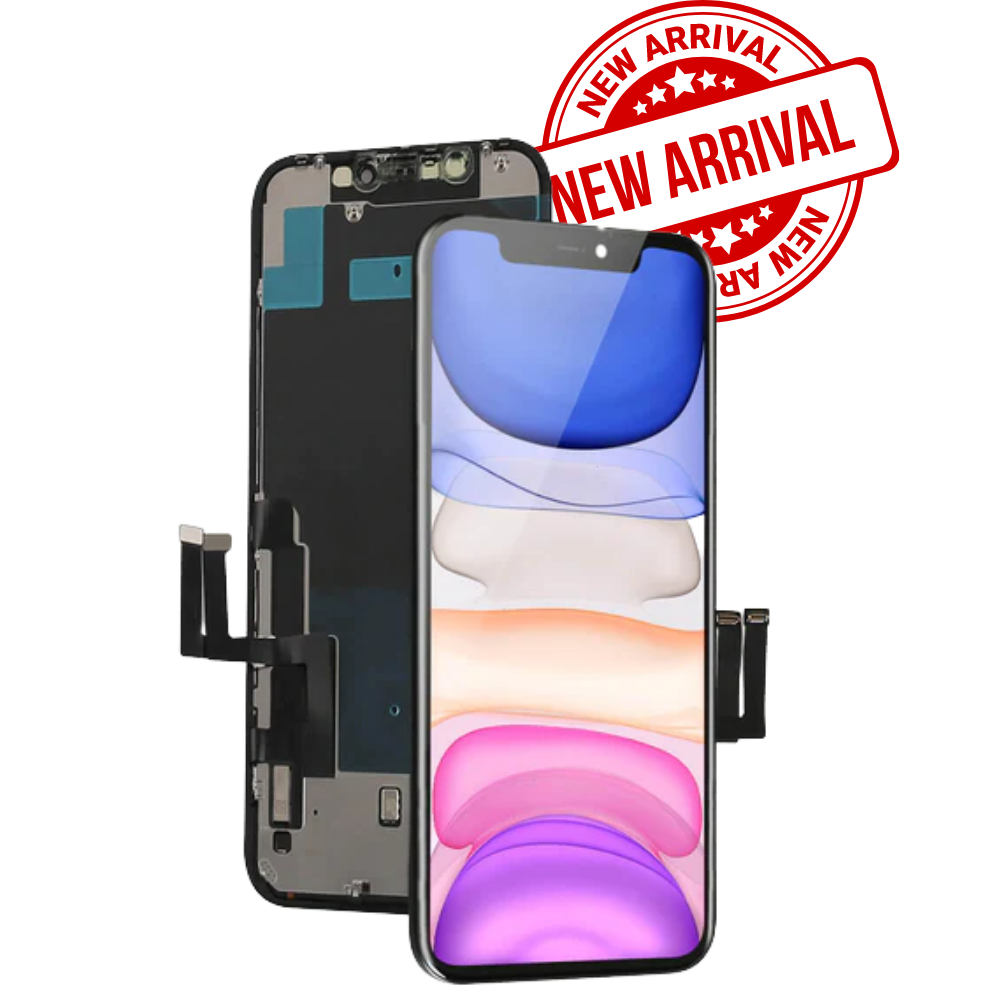
A kijelzőpanel az LCD szíve. Folyékony kristályokat tartalmaz, színszűrők, és pixel mátrix. Itt alakul ki a tényleges kép.
Érintse meg a Réteg és üveg elemet
A kijelző felett található az érintésérzékeny réteg, általában kapacitív technológiával készülnek. Ez teszi lehetővé a telefonnal való interakciót – érintse meg, elcsór, zoomolás.
A legkülső réteg védőüveg, gyakran megerősített, hogy ellenálljon a karcolásoknak és ütéseknek.
Illesztőprogram IC (FASZ)
A Driver IC szabályozza a pixelek viselkedését. Feldolgozza a telefon processzorától érkező jeleket, és vizuális kimenetté alakítja azokat. Anélkül, a képernyője nem tudja, mit jelenítsen meg.
Fontos LCD kijelző műszaki adatok
Felbontás és pixelsűrűség
A felbontás azt jelenti, hogy hány pixel van a képernyőn. A nagyobb felbontás élesebb képeket jelent. Pixelsűrűség (PPI) meghatározza, hogy milyen éles szöveg és képek jelenjenek meg.
Fényerő és kontraszt
A fényerőt nitekben mérik. A nagyobb fényerő jobb láthatóságot jelent a szabadban. A kontraszt határozza meg a világos és sötét területek közötti különbséget.
Frissítési gyakoriság
Frissítési gyakoriság (Hz-ben mérve) azt jelzi, hogy másodpercenként hányszor frissül a képernyő. A modern LCD képernyők elérhetik a 120 Hz-et, simább görgetést és játékélményt biztosít.
Az LCD képernyők előnyei
Az LCD-kijelzőknek számos erőssége van, amelyek továbbra is relevánsak:
- Alacsonyabb gyártási költség
- Jobb láthatóság világos környezetben
- Nincs beégés veszélye
- Stabil és hosszan tartó teljesítmény
Ezeknek az előnyöknek köszönhetően az LCD készülékek milliárdjai számára a legmegfelelőbb választás világszerte.
Az LCD képernyők hátrányai
Természetesen, egyetlen technológia sem tökéletes. Az LCD-képernyőknek van néhány hátránya:
- Alacsonyabb kontraszt az OLED-hez képest
- Vastagabb kialakítás a háttérvilágításnak köszönhetően
- Bizonyos helyzetekben kevésbé energiatakarékos
Még mindig, sok felhasználó számára, ezek a kompromisszumok elfogadhatók.
LCD-piaci trendek és iparági betekintések
Az LCD-piac ahelyett, hogy eltűnne, tovább fejlődik. Valójában, a globális mobil LCD-piac az előrejelzések szerint a következő évtizedben folyamatosan, milliárdokkal növekedni fog citeturn0search1.
Az a lenyűgöző, hogy az LCD technológia alkalmazkodik – magasabb frissítési gyakoriság, vékonyabb keretek, a jobb energiahatékonyság pedig versenyképes marad. Még akkor is, ha az OLED bővül, Az LCD továbbra is domináns a középkategóriás eszközök között megfizethetőségének és kiforrott ellátási láncának köszönhetően.
A mobil LCD technológia jövője
Így, mi következik az LCD-nél? Az innováció még mindig történik. Az új fejlesztések, mint pl oxid TFT technológia drámaian javítják az energiahatékonyságot, még azt is lehetővé teszi, hogy a kijelzők rendkívül alacsony frissítési gyakoriságra csökkenjenek az akkumulátor kímélése érdekében.
A gyártók az LCD-panelek vékonyabbá tételére is összpontosítanak, világosabb, és színpontosabb. Nem az OLED lecseréléséről van szó – hanem arról együtt élnek és fejlődnek.
Az LCD már nem csak a „költségvetési opció”. Ez válik a kifinomult, optimalizált technológia valós használatra szabva.
Következtetés
Előfordulhat, hogy a mobil LCD-kijelzők nem ragadják meg az olyan címsorokat, mint az OLED vagy az összecsukható képernyők, de továbbra is az egyik legfontosabb technológia az okostelefonok világában. Megbízhatóak, költséghatékony, és folyamatosan fejlődik. A folyadékkristályok fénykezelési módjától kezdve az egyes pixeleket alkotó bonyolult rétegekig, Az LCD-technológia a szem előtt rejtett mérnöki remekmű.
Ha ma okostelefont használ, jó eséllyel az LCD-képernyő erősíti az élményt – és ezt rendkívül jól teszi. A működésének megértése nemcsak okosabb vásárlóvá tesz, hanem mélyebb elismerést is ad a nap mint nap használt technológiának..
GYIK
1. Az LCD jobb, mint az OLED okostelefonokhoz?
Az Ön igényeitől függ. Az LCD megfizethetőbb és tartósabb, míg az OLED jobb kontrasztot és vékonyabb dizájnt kínál.
2. Miért olcsóbbak az LCD képernyők??
Az LCD-gyártás kiforrottabb és méretezhetőbb, jelentősen csökkenti a termelési költségeket.
3. Az LCD-képernyők több akkumulátort fogyasztanak??
Bizonyos esetekben több energiát fogyaszthatnak, mert a háttérvilágítás mindig be van kapcsolva.
4. Beéghetnek az LCD képernyők?
Nem, Az LCD-képernyők nem szenvednek olyan beégési problémáktól, mint az OLED-kijelzők.
5. Az LCD képernyőket még mindig használják? 2026?
Igen, széles körben használják, és még mindig a globális okostelefon-kijelzők nagy részét teszik ki.