Ce este un afișaj LCD mobil?
Definiție și Concept de bază
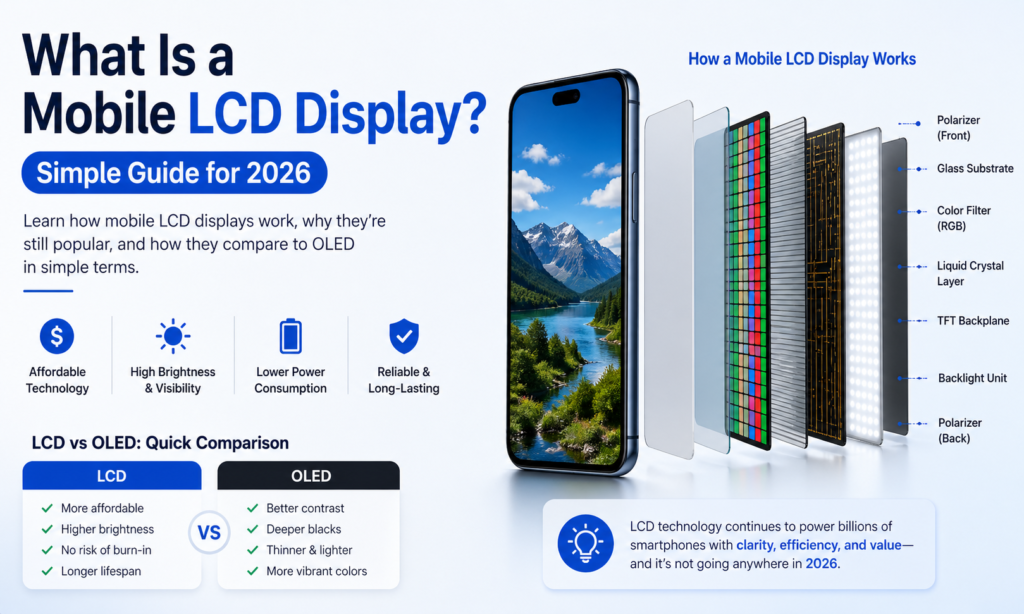
Dacă v-ați uitat vreodată la telefon ore în șir, derulând, vizionarea videoclipurilor, sau răspunzi la mesaje — ai interacționat cu una dintre cele mai importante piese de tehnologie din dispozitivul tău: the Afișaj LCD. LCD înseamnă Afișare de cristal lichid, și a fost coloana vertebrală a ecranelor mobile de zeci de ani. Gândiți-vă la el ca la un sandviș de straturi atent conceput, unde cristalele lichide stau între panourile de sticlă și controlează modul în care trece lumina pentru a crea imagini.
Dar iată partea interesantă: ecranele LCD nu produc lumină de la sine. În schimb, se bazează pe o lumina de fundal. Imaginează-ți o scenă de teatru: lumina de fundal este reflectorul, iar cristalele lichide sunt artiștii care modelează ceea ce vezi. Fără acea sursă de lumină, ecranul ar rămâne complet întunecat.
Chiar și în 2026, Tehnologia LCD nu a dispărut în obscuritate. Încă alimentează o mare parte a smartphone-urilor, în special în dispozitivele de gamă medie și buget. Asta pentru că atinge un echilibru între costuri, fiabilitate, și performanțe pe care mulți producători pur și simplu nu le pot ignora.
De ce LCD-ul este încă folosit pe scară largă
S-ar putea să vă întrebați: cu tehnologii mai noi precum OLED care domină titlurile, de ce mai contează LCD-ul? Răspunsul este surprinzător de practic—eficiență a costurilor și scalabilitate. Conform datelor recente ale pieței, LCD încă contează peste 43% a livrărilor de display mobile la nivel global, depăşind 1.28 miliarde de unități în 2026 .
Acesta nu este un număr mic - este masiv. Arată că, în timp ce telefoanele premium se îndreaptă către OLED, majoritatea populației globale se bazează în continuare pe dispozitive bazate pe LCD. Producătorii preferă LCD-ul deoarece este mai ieftin de produs, mai ușor de scalat, și mai durabil în anumite condiții.
În termeni simpli, LCD nu este depășit - este esenţială din punct de vedere strategic. Este ca o mașină de familie de încredere: poate nu sclipitor, dar de încredere, accesibil, si peste tot.
Cum funcționează ecranele LCD în telefoane inteligente
Rolul cristalelor lichide
Să o defalcăm într-un mod care are sens. În interiorul unui ecran LCD, veți găsi milioane de celule minuscule pline cu cristale lichide. Aceste cristale sunt speciale - se pot răsuci și alinia atunci când se aplică electricitate. Această mișcare controlează cât de multă lumină trece prin fiecare pixel.
Gândiți-vă la fiecare pixel ca la o jaluză mică. Când cristalul se răsucește, fie lasă lumina să treacă, fie o blochează. Înmulțiți asta cu milioane, și dintr-o dată ai o imagine completă - videoclipuri, fotografii, text — totul redat în timp real.
Acest proces are loc incredibil de rapid, motiv pentru care nu observați nicio întârziere când derulați sau vizionați videoclipuri. Este o iluzie fără sudură alimentată de fizică și inginerie de precizie.
Iluminare de fundal și filtre de culoare explicate
Deoarece cristalele lichide nu emit lumină, Ecranele LCD au nevoie de a lumina de fundal, de obicei realizate din LED-uri. Această lumină de fundal strălucește prin stratul de cristal și apoi trece prin filtre de culoare-roşu, verde, și albastru.
Prin ajustarea cât de multă lumină lasă fiecare subpixel să treacă, display-ul creează milioane de culori. Este similar cu amestecarea vopselelor, dar în loc de pigmenți, totul tine de intensitatea luminii.
Rezultatul? Un strălucitor, ecran colorat care funcționează bine chiar și în medii în aer liber. Acesta este un domeniu în care LCD-ul funcționează adesea mai bine decât OLED, mai ales sub lumina directă a soarelui.
Tipuri de afișaje LCD în telefoanele mobile
LCD TFT
TFT (Tranzistor cu peliculă subțire) LCD este unul dintre cele mai vechi și de bază tipuri de tehnologie LCD utilizată în smartphone-uri. Utilizează o matrice de tranzistori pentru a controla fiecare pixel în mod individual, permițând timpi de răspuns mai rapid în comparație cu tehnologiile mai vechi.
Cu toate acestea, Ecranele TFT suferă de obicei de unghiuri de vizualizare mai înguste și de reproducere a culorilor mai puțin precisă. Se găsesc adesea în dispozitivele entry-level unde costul este principala prioritate.
LCD IPS
IPS (Comutare în plan) LCD este locul unde lucrurile devin interesante. Această tehnologie îmbunătățește unghiurile de vizualizare și acuratețea culorilor prin alinierea diferită a cristalelor lichide. Dacă ați înclinat vreodată telefonul și ați observat că ecranul încă arată clar, probabil că utilizați un afișaj IPS.
IPS LCD a devenit standard industrial pentru smartphone-uri de gamă medie, deoarece oferă un echilibru excelent între calitate și accesibilitate. Culorile par mai naturale, iar nivelurile de luminozitate sunt în general mai ridicate.
LCD LTPS
LTPS (Siliciu policristalin la temperatură joasă) LCD duce lucrurile și mai departe. Permite un ecran LCD cu pixeli mai mari duce lucrurile și mai departe. Permite o densitate mai mare de pixeli și o eficiență energetică mai bună. Acest tip este folosit în mod obișnuit în panourile LCD de ultimă generație și chiar concurează cu OLED în unele aspecte.
Este ca și cum ai trece de la un motor obișnuit la unul turbo - mai multă performanță fără a crește drastic costul.
LCD vs OLED: Care este diferența?
Diferențele tehnice cheie
| Caracteristică | LCD | OLED |
|---|---|---|
| Sursă de lumină | Este necesară iluminarea de fundal | Pixeli auto-emisivi |
| Contrast | Moderat | Extrem de sus |
| Eficiență energetică | Stabil | Mai bine în modul întunecat |
| Cost | Mai jos | Superior |
| Durabilitate | Mai stabil | Risc de ardere |
Ecranele OLED au preluat segmentul premium deoarece oferă un negru mai profund și un contrast mai bun. Cu toate acestea, LCD încă domină în ceea ce privește accesibilitatea și consistența.
Pe care ar trebui să-l alegi?
A alege între LCD și OLED este ca și cum ai alege între un sedan de încredere și o mașină sport de înaltă performanță. Dacă doriți imagini vibrante și tehnologie de ultimă oră, OLED-ul este tentant. Dar dacă îți pasă cost, durabilitate, și fiabilitate, LCD rămâne o alegere solidă.
Interesant este, LCD încă ține peste 70% cota de piață accesibilitate și adoptare pe scară largă citeturn0search9. Numai asta vă spune că este departe de a fi învechit.
Componentele cheie ale unui ecran LCD mobil
Panoul de afișare
Panoul de afișare este inima LCD-ului. Conține cristale lichide, filtre de culoare, și matricea de pixeli. Aici se formează imaginea reală.
Atinge Strat și Sticlă
Deasupra afișajului se află stratul sensibil la atingere, realizate de obicei cu tehnologie capacitivă. Acesta este ceea ce vă permite să interacționați cu telefonul: atingeți, beţivan, zoom.
Stratul exterior este sticlă de protecție, adesea ranforsat pentru a rezista la zgarieturi si impacturi.
Driver IC (DICK)
Driver IC controlează modul în care se comportă pixelii. Procesează semnalele de la procesorul telefonului și le transpune în rezultate vizuale. Fără el, ecranul tău nu ar ști ce să afișeze.
Specificații importante pentru afișajul LCD
Rezoluție și densitate pixeli
Rezoluția se referă la câți pixeli sunt împachetati pe ecran. Rezoluție mai mare înseamnă imagini mai clare. Densitatea pixelilor (PPI) determină cât de clare apar textul și imaginile.
Luminozitate și contrast
Luminozitatea este măsurată în nits. O luminozitate mai mare înseamnă o vizibilitate mai bună în aer liber. Contrastul determină diferența dintre zonele luminoase și cele întunecate.
Rata de reîmprospătare
Rata de reîmprospătare (măsurată în Hz) indică de câte ori se actualizează ecranul pe secundă. Ecranele LCD moderne pot atinge 120 Hz, oferind experiențe mai fluide de defilare și de joc.
Avantajele ecranelor LCD
Ecranele LCD au mai multe puncte forte care le mențin relevante:
- Cost de producție mai mic
- Vizibilitate mai bună în medii luminoase
- Fără risc de ardere
- Performanță stabilă și de lungă durată
Aceste avantaje fac LCD alegerea ideală pentru miliarde de dispozitive din întreaga lume.
Dezavantajele ecranelor LCD
Desigur, nicio tehnologie nu este perfectă. Ecranele LCD au unele dezavantaje:
- Contrast mai mic comparativ cu OLED
- Design mai gros datorită luminii de fundal
- Mai puțin eficient din punct de vedere energetic în anumite scenarii
Încă, pentru mulți utilizatori, aceste compromisuri sunt acceptabile.
Tendințele pieței LCD și perspectivele industriei
Piața LCD continuă să evolueze decât să dispară. De fapt, se estimează că piața globală a LCD-urilor mobile va crește în mod constant, în valoare de miliarde în următorul deceniu citeturn0search1.
Ceea ce este fascinant este că tehnologia LCD se adaptează - rate de reîmprospătare mai mari, rame mai subțiri, și eficiența energetică îmbunătățită îl mențin competitiv. Chiar dacă OLED se extinde, LCD rămâne dominant în dispozitivele de gamă medie datorită accesibilității și lanțului său de aprovizionare matur.
Viitorul tehnologiei LCD mobile
Aşa, ce urmează pentru LCD? Inovația încă se întâmplă. Noi dezvoltări ca tehnologia oxid TFT îmbunătățesc eficiența energetică în mod dramatic, chiar și permițând afișajelor să scadă la rate de reîmprospătare extrem de scăzute pentru a economisi bateria.
Producătorii se concentrează, de asemenea, pe realizarea panourilor LCD mai subțiri, mai luminos, și mai precise la culoare. Nu este vorba despre înlocuirea OLED-ului, ci despre coexistând și evoluând.
LCD nu mai este doar „opțiunea bugetară”. Devine o rafinat, tehnologie optimizată adaptate pentru utilizare în lumea reală.
Concluzie
Este posibil ca afișajele LCD mobile să nu atragă titluri precum OLED sau ecranele pliabile, dar rămân una dintre cele mai importante tehnologii din lumea smartphone-urilor. Sunt de încredere, rentabil, și în continuă îmbunătățire. De la modul în care cristalele lichide manipulează lumina până la straturile complicate care formează fiecare pixel, Tehnologia LCD este o capodoperă a ingineriei ascunsă la vedere.
Dacă utilizați un smartphone astăzi, există șanse mari ca un ecran LCD să vă alimenteze experiența – și să o facă remarcabil de bine. Înțelegerea modului în care funcționează nu numai că te face un cumpărător mai inteligent, dar îți oferă și o apreciere mai profundă pentru tehnologia pe care o folosești în fiecare zi.
Întrebări frecvente
1. Este LCD-ul mai bun decât OLED pentru smartphone-uri?
Depinde de nevoile tale. LCD-ul este mai accesibil și mai durabil, în timp ce OLED oferă un contrast mai bun și un design mai subțire.
2. De ce sunt ecranele LCD mai ieftine?
Producția LCD este mai matură și mai scalabilă, reducerea semnificativă a costurilor de producție.
3. Ecranele LCD consumă mai multă baterie?
Ele pot consuma mai multă energie în unele scenarii, deoarece lumina de fundal este mereu aprinsă.
4. Ecranele LCD se pot arde??
Nu, Ecranele LCD nu suferă de probleme de ardere, cum ar fi afișajele OLED.
5. Ecranele LCD sunt încă folosite în? 2026?
Da, sunt utilizate pe scară largă și încă reprezintă o mare parte din afișajele globale pentru smartphone-uri.