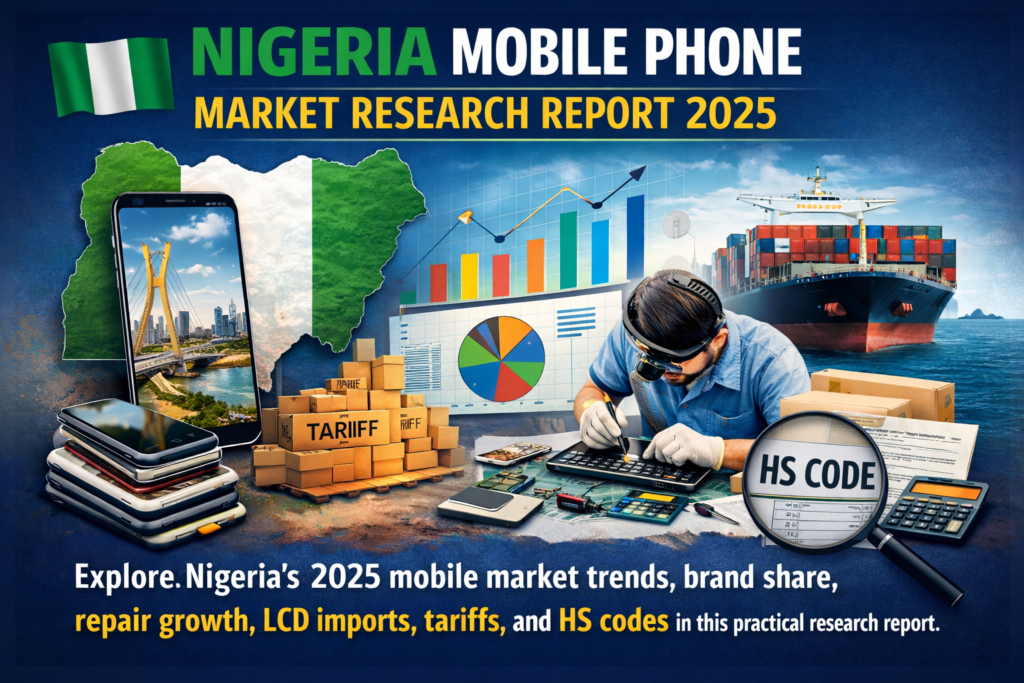
Data raportului: decembrie 2025
Domeniul cercetării: Nigeria
Cuvinte cheie: Cota de piață a mărcii mobile, piața reparațiilor de smartphone-uri, tipuri de reparații, Importuri LCD, tarifele, coduri HS
Rezumat
Redresarea pieței după volatilitatea monedei
2025 a fost un an de revenire pentru industria telefoanelor mobile din Nigeria. După dureroasa turbulență valutară a 2024, stabilizarea nairei a dat timp atât importatorilor, cât și consumatorilor. Și ghici ce? Încrederea a revenit repede.
Până la Q3 2025, livrările de smartphone-uri au crescut 29% de la an la an. Asta nu este doar recuperare, ci și accelerare.
Concurență de marcă și leadership pe piață
Piața este încă dominată în mare măsură de mărcile Transsion—Tecno, Infinix, si itel. Împreună, ei controlează aproape jumătate din spațiul smartphone-urilor din Nigeria. Între timp, Samsung și Apple continuă să dețină poziții puternice în segmentul premium.
Este ca și cum ai vedea două curse deodată: dispozitive bugetare sprintează pe o pistă și telefoane emblematice care navighează pe alta.
Extinderea industriei de reparații
Cu peste 140 milioane de smartphone-uri în uz, Piața de reparații din Nigeria este în plină expansiune. Înlocuirea ecranului și schimbarea bateriei sunt afaceri de zi cu zi. Economia reparațiilor nu este o poveste secundară, ci este un pilon central.
Importurile LCD și provocările tarifare
Iată răsucirea: în timp ce smartphone-urile complet asamblate se bucură 0% taxă de import, piesele de schimb precum ecranele LCD se confruntă cu tarife între 5% şi 20%, plus 5% CUVĂ. Acest dezechilibru modelează întregul ecosistem de reparații.
Prezentare generală a pieței de telefoane mobile din Nigeria
Baza de utilizatori și penetrarea smartphone-ului
De la mijlocul anului 2025, Nigeria are 172 milioane de abonați de telefonie mobilă. Penetrarea smartphone-ului a ajuns la aproximativ 87%. Asta înseamnă că aproape toți cei care își doresc un smartphone au probabil unul sau sunt pe cale să cumpere unul.
Creșterea livrărilor în 2025
The 29% creșterea livrărilor în T3 2025 semnalează un reînnoit optimism economic. Cererea de la nivel de intrare a explodat, dar și cererea de prime a crescut brusc.
Structura pieței: Modelul de creștere „halteră”.
Gândește-te la asta ca la o ganteră. Greutatea este mare la ambele capete:
- Dispozitivele sub 100 USD au crescut 57%.
- Dispozitive premium de mai sus $500 a crescut 52%.
Segmentul mijlociu? Puțin mai liniștit.
Dimensiunea pieței și factorii de creștere
Impactul stabilizării cursului de schimb
Când naira s-a stabilizat, predictibilitatea importurilor a fost îmbunătățită. Comercianții cu amănuntul ar putea stabili prețul produselor cu încredere. Consumatorii au încetat să mai aștepte și au început să cumpere.
Creșterea cererii de dispozitive la nivel de intrare
Performanța segmentului sub 100 USD
Telefoane inteligente la prețuri accesibile de la Tecno, Infinix, iar itel dominat. Pentru mulți nigerieni, raportul calitate-preț nu este opțional – este esențial.
Extindere segment premium
În același timp, consumatorii înstăriți din Lagos și Abuja au crescut cererea pentru produsele emblematice Apple și Samsung.
Două lumi, o singură piață.
Cota de piață a mărcii mobile în 2025
- Tecno: 21.45%
- Infinix: 18.26%
- Samsung: 14%
- Măr: 10.06%
- Xiaomi: 7.89%
- Alții/Necunoscut: 28.41%
Conducerea de piață a Tecno
Tecno conduce datorită inovației localizate — algoritmi de cameră optimizați pentru tonuri de piele mai închise și prețuri competitive.
Infinix și Youth Appeal
Infinix vorbește limba tinerilor nigerieni – design elegant, focalizare pe performanță, marketing online.
Strategia Samsung cu două segmente
De la seria A accesibilă până la modelele Galaxy de ultimă generație, Samsung joacă atât în atac, cât și în apărare.
Creșterea pieței premium a Apple
Numerele Apple pot fi mai mici, dar creșterea sa în segmentul high-end este puternică.
Strategia de prețuri competitive a Xiaomi
Xiaomi continuă să împingă modelele Redmi cu prețuri agresive în gama medie.
Analiza pieței de reparații de smartphone-uri din Nigeria
Valoarea de piață și prognoza CAGR
În 2024, Piața de reparații electronice din Nigeria a ajuns $785.84 milion. De 2030, este proiectat să depășească $1.12 miliard, crescând la 6.02% CAGR.
Asta e constant, creștere previzibilă.
Reparații hardware vs software
Hardware-ul domină. Ecranele sparte și bateriile învechite generează cele mai multe venituri.
Defalcarea tipurilor de reparații
Cererea de înlocuire a ecranului
Acesta este regele. Se întâmplă picături. Ecranele crapă. Fluxurile de venituri.
Tendințe de înlocuire a bateriilor
După 1–2 ani, degradarea bateriei devine vizibilă. Încărcarea rapidă accelerează uzura.
Port de încărcare & Reparatii placa de baza
Daunele lichide și uzura porturilor creează reparații cu o marjă mai mare.
Servicii software
Deblocare, clipind, iar actualizările rămân comune.
Structura industriei de reparații
Dominanța sectorului informal
Tehnicienii stradali încă domină. Chioșcurile mici depășesc numărul lanțurilor formale de reparații.
Centre de service autorizate
Mărcile precum Carlcare se extind, oferind servicii standardizate.
Inițiative de sprijin guvernamental
Unele guverne regionale au lansat fonduri de formare pentru a profesionaliza abilitățile de reparații.
Import de ecran LCD și analiză comercială
Dependența de importuri
Nigeria nu are capacitate locală de producție LCD. Aproape toate ecranele sunt importate.
Coduri HS pentru piese mobile
- Smartphone-uri: HS 8517.12
- Piese de telefon/ecrane: HS 8517.70
- Baterii cu litiu: HS 8507.60
Principalele țări exportatoare
Vietnam conduce, urmate de China și Coreea de Sud.
Nigeria 2025 Politica tarifară și de import
Tarif de import pentru smartphone (HS 8517.12)
0% datorie. Dar 5% se aplica TVA.
Ecran LCD și tarif pentru piese (HS 8517.70)
5%– 20% taxă, in functie de clasificare. Plus 5% CUVĂ.
Tarif baterie cu litiu (HS 8507.60)
5%–20%, este necesară o certificare de siguranță mai strictă.
Exemplu de calcul TVA și CIF
Import $10,000 valoare de ecrane cu 10% datorie:
- Datoria: $1,000
- CUVĂ: 5% pe ($10,000 + $1,000)
- Povara fiscală totală crește semnificativ.
Formularul M și Certificarea SONCAP
Înregistrarea formularului M și conformitatea cu SONCAP sunt obligatorii pentru electronicele reglementate.
Impactul tarifelor asupra pieței reparațiilor
Presiunea costurilor asupra pieselor originale
Piesele originale devin scumpe și lent de importat.
Creșterea componentelor pieței gri
Ecranele de piață de schimb cu costuri reduse inundă piața.
Probleme de calitate și încredere a consumatorilor
Calitatea inconsecventă erodează încrederea în serviciile de reparații.
Oportunități pentru investitori și afaceri
Reparați extinderea lanțului
Lanțurile de reparații standardizate pot captura cota de piață.
Distributie piese de schimb
Furnizarea de piese de încredere este o oportunitate de mină de aur.
Formare și dezvoltare a abilităților
Centrele de formare profesională pot ridica standardele industriei.
Perspectivele pieței pentru 2026 și dincolo
Prognoza expedierii
În timp ce Africa se poate confrunta cu o ușoară contracție, Baza mare a Nigeriei oferă rezistență.
Proiecția pieței reparațiilor
Pe măsură ce dispozitivele îmbătrânesc, cererea de reparații va rămâne puternică.
Provocări în lanțul de aprovizionare
Reformele tarifare și standardizarea pieselor vor modela viitorul.
Concluzie
Piața de telefoane mobile din Nigeria în 2025 stă la o răscruce de drumuri. Creșterea a revenit. Încrederea crește. Cererea de la nivel de intrare este înfloritoare, iar cumpărătorii premium cheltuiesc din nou. Totuși, sub suprafață, industria reparațiilor se luptă cu dezechilibrele tarifare și cu ineficiența lanțului de aprovizionare.
Oportunitatea? Masiv.
Oricine rezolvă puzzle-ul pieselor de schimb — importuri eficiente, componente autentice, prețuri echitabile — va debloca următoarea fază a creșterii durabile a ecosistemului de smartphone-uri din Nigeria.
Întrebări frecvente
1. În ce este rata de penetrare a smartphone-urilor din Nigeria 2025?
Aproximativ 87%, cu peste 140 milioane de smartphone-uri în uz activ.
2. Ce marcă conduce piața de smartphone-uri din Nigeria 2025?
Tecno deține cea mai mare cotă de piață individuală.
3. De ce piața reparațiilor crește rapid?
O bază mare instalată și dispozitivele învechite generează cererea de înlocuire a ecranelor și bateriilor.
4. Care este taxa de import pentru smartphone-uri în Nigeria?
Telefoanele inteligente complet asamblate poartă 0% taxe de import dar necesită 5% CUVĂ.
5. De ce sunt scumpe reparațiile ecranului LCD?
Deoarece ecranele de rezervă se confruntă cu taxe de import de 5%–20% plus TVA și cerințe de certificare.