Piața de reparații a ecranului iPhone este masivă. Nu doar mare - complex, stratificat, și uneori confuz. Pentru ateliere de reparatii si angrosisti, înțelegerea specificațiilor ecranului aftermarket nu este opțională. Este diferența dintre profituri puternice și plângeri constante ale clienților.
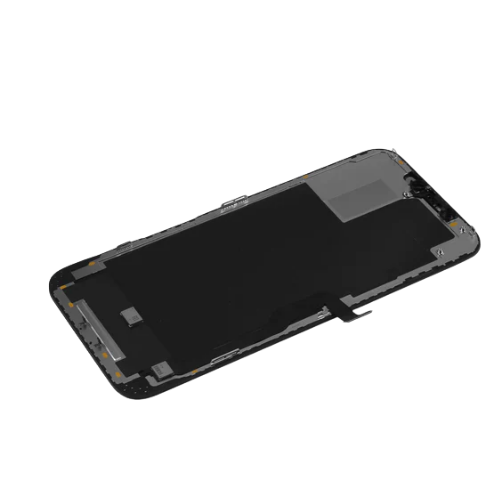
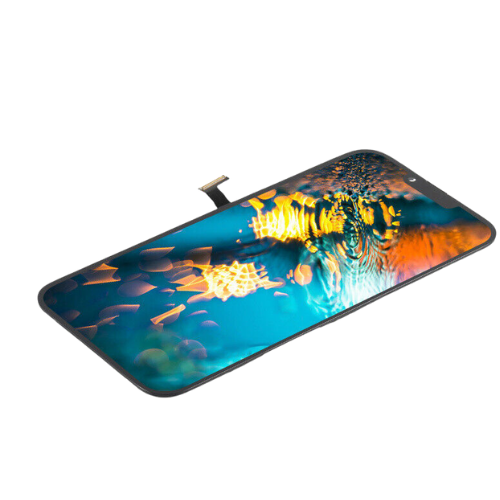
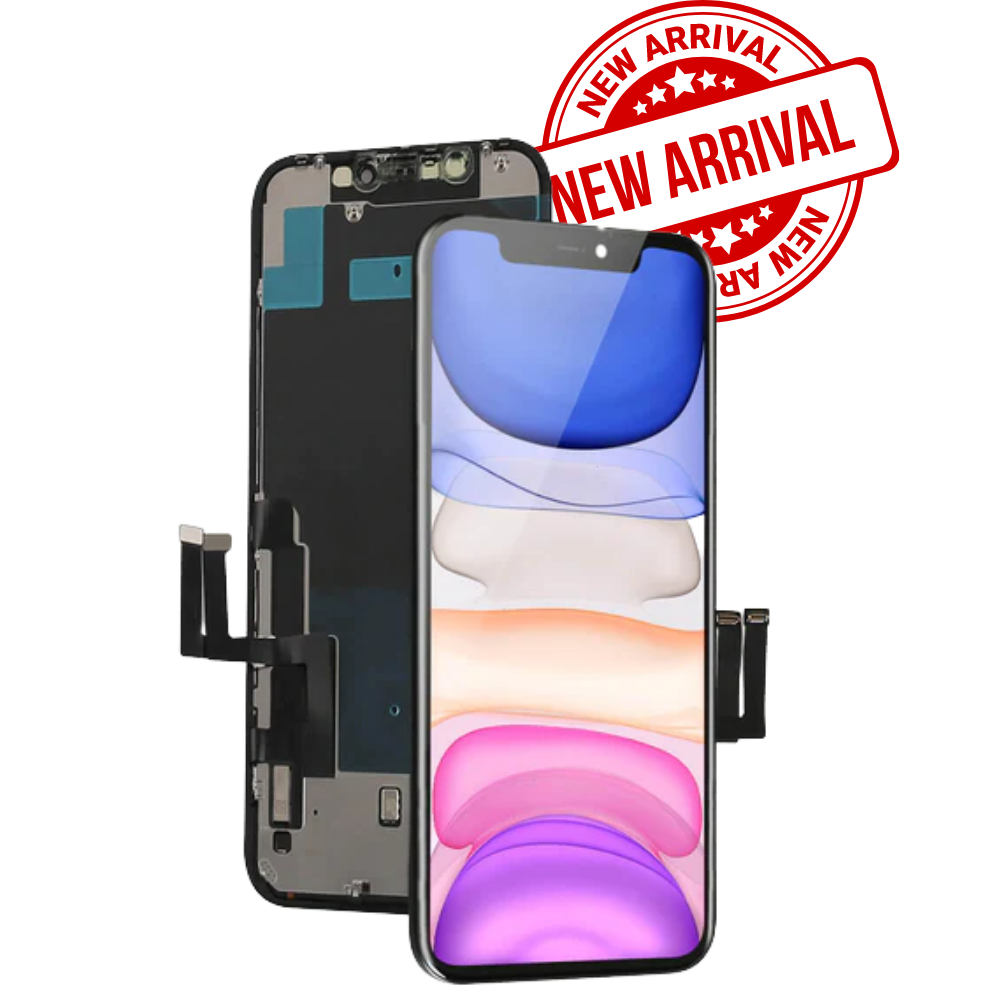
Gândiți-vă la un ecran de iPhone ca inima telefonului. Nu este doar o bucată de sticlă. Este un modul complet integrat care combină afișajul, digitizator tactil, Componente Face ID, senzori de proximitate, cască, și altele. Înlocuiți-l incorect, și întreaga experiență se schimbă.
Deci, cum alegi ecranul potrivit? Să o descompunem pas cu pas.
De ce ecranele iPhone domină industria reparațiilor
Deteriorarea ecranului este reparația numărul unu pentru iPhone la nivel mondial. Se întâmplă picături. Crăpături de sticlă. Ecranele devin negre. Și când se întâmplă asta, Clienții nu vor explicații - vor soluții.
Dar iată partea dificilă: nu toate ecranele de schimb sunt la fel.
Puteți cumpăra un ecran pentru $15 sau $150. Ambele „se potrivesc”. Dar au ei la fel? Absolut nu.
Acolo, înțelegerea specificațiilor devine avantajul tău competitiv.
Fundația – două tehnologii de bază pentru ecran
Înainte chiar să vorbim despre notele aftermarket, trebuie să înțelegem un adevăr de bază:
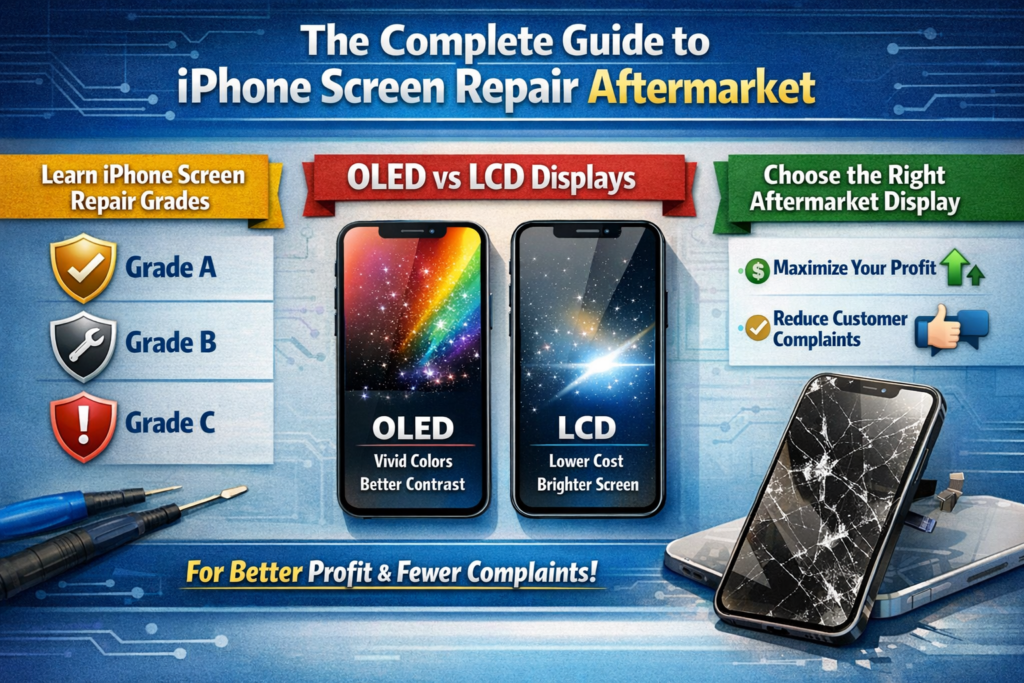
Există doar două tehnologii de afișare de bază în iPhone-uri.
Tehnologia LCD explicată
LCD (Afișare de cristal lichid) ecranele au fost folosite în modele precum:
- iPhone 6 / 7 / 8
- iPhone XR
- iPhone 11
- Seria iPhone SE
Ecranele LCD necesită o lumină de fundal pentru a ilumina pixelii. De aceea negrul par ușor gri - lumina de fundal este mereu aprinsă.
Avantaje:
- Cost mai mic
- Aprovizionare matură de piață de schimb
- Performanță stabilă
Limitări:
- Contrast mai mic
- Culori mai puțin vibrante
- Structură puțin mai groasă
Tehnologia OLED explicată
Pornind de la iPhone X, Apple a trecut la OLED pentru majoritatea modelelor premium.
Panourile OLED sunt utilizate în:
- iPhone X
- iPhone 12 / 13 / 14 / 15 / 16 serie (cu excepția SE)
Fiecare pixel emite propria sa lumină. Asta înseamnă negri adevărați, contrast infinit, și o eficiență energetică mai bună.
OLED este mai subțire, mai luminos, și mai vibrant - dar și mult mai scump de produs.
Diferențele cheie între LCD și OLED
| Caracteristică | LCD | OLED |
|---|---|---|
| Lumina de fundal | Necesar | Nu este necesar |
| Culoare Neagră | cenușiu | Negru adevărat |
| Contrast | Limitat | Infinit |
| Grosime | Mai gros | Mai subțire |
| Cost | Mai jos | Superior |
Această diferență tehnologică definește totul în piața de schimb.
Cinci clase majore de ecran pentru iPhone de pe piața de schimb
Acum să intrăm pe adevăratul câmp de luptă - clasificarea pieței de schimb.
1. Paravane trase originale (OEM dezasamblat)
Acestea sunt ecrane Apple autentice eliminate de pe dispozitivele folosite.
Fără producție terță parte. Fără schimburi de componente.
De ce sunt premium:
- Precizie perfectă a culorii
- Niveluri originale de luminozitate
- Ton adevărat & ProMotion este pe deplin acceptat
- Compatibilitatea cu Face ID păstrată
Ele oferă performanță la nivel de fabrică.
Dezavantajul? Cost ridicat și aprovizionare limitată.
2. Ecrane originale recondiționate (Sticla inlocuita)
Aici devine interesant.
Tehnicienii îndepărtează sticla spartă de pe un panou original și laminează un nou strat de sticlă.
Panoul intern OLED sau LCD rămâne original.
Performanţă:
- Calitatea afișajului aproape identică cu cea a OEM
- Performanța tactilă depinde de calitatea sticlei
- True Tone de obicei păstrat
Gândiți-vă la asta ca la repararea „fereastră” în timp ce păstrați motorul original.
Preţ: Mai jos decât OEM tras, dar totuși premium.
3. Ecrane originale testate prin diagnosticare
Acestea sunt ecrane originale care au fost testate și evaluate profesional.
Acestea pot proveni din programe oficiale de service sau din centre de renovare la scară largă.
Performanța este consistentă și de încredere, deși pot exista imperfecțiuni cosmetice minore.
Această categorie oferă echilibru între preț și fiabilitate.
4. Ecrane OLED de la terți
Acesta este cel mai competitiv segment de pe piața actuală.
Produs în întregime de fabrici terțe.
Există două tipuri principale:
OLED dur
Folosește substraturi rigide.
Caracteristici:
- Puțin mai gros
- Rama inferioara mai lata ("bărbie")
- Mai accesibil
Performanţă:
- Culoare decentă
- Luminozitate moderată
- Durabilitate mai mică comparativ cu originalul
Flexibil (Moale) OLED
Folosește substraturi flexibile similare panourilor originale Apple.
Avantaje:
- Design subțire
- Ramă îngustă
- Reproducere mai bună a culorilor
- Luminozitate mai mare
Ecranele OLED moi de înaltă calitate pot suporta chiar și True Tone după transferul de date.
Dar chiar și ecranele OLED moi de nivel superior pot apărea:
- Ușoară schimbare de culoare la unghiuri extreme
- Risc mai mare de ardere
- Uniformitate redusă cu luminozitate scăzută
Avertizare de sistem? Da — iPhone-ul va afișa probabil „Nu se poate verifica că acest iPhone are un afișaj Apple autentic”.
5. LCD terță parte (Incell / TFT) pentru modelele OLED
Aceasta este varianta bugetară.
Unele piețe de reparații înlocuiesc ecranele OLED cu alternative LCD pentru a reduce costurile.
Performanță compromisă:
- Luminozitate mai mică
- Culori spălate
- Unghiuri de vizualizare slabe
- Fără ton adevărat
Funcționează, dar este ca și cum ai pune anvelope economice pe o mașină sport.
Pentru modelele LCD native (ca iPhone 11), Calitatea LCD de la terți este mai matură și mai acceptabilă, deși încă inferior celui original.
Comparație de performanță de bază
Să simplificăm.
| Nota | Culoare | Luminozitate | Ton adevărat | Durabilitate | Preţ |
|---|---|---|---|---|---|
| OEM tras | Excelent | Excelent | Da | Excelent | $$$$ |
| OEM recondiționat | Excelent | Excelent | Da | Foarte bun | $$$ |
| OLED moale | Foarte bun | Foarte bun | Parţial | Bun | $$ |
| OLED dur | Moderat | Moderat | Nu | Moderat | $$ |
| LCD Incell | De bază | Scăzut | Nu | De bază | $ |
Un lucru este clar: prețul reflectă performanța.
Termeni tehnici importanți pe care trebuie să-i cunoașteți
Tehnologia Incell
Incell integrează atingerea în stratul LCD.
În limbajul aftermarket, de obicei, se referă la înlocuiri de LCD cu costuri mai mici.
Funcționalitatea True Tone
True Tone ajustează temperatura culorii în funcție de lumina ambientală.
Fără instrumente originale de transfer de date, această caracteristică nu va funcționa pe majoritatea ecranelor de la terți.
Compatibilitate cip IC
Circuitul integrat al driverului de afișare controlează luminozitatea și răspunsul la atingere.
Ecranele superioare pot permite transferul IC de la panourile originale, imbunatatirea stabilitatii.
OLED dur vs OLED flexibil
OLED flexibil este egal cu un nivel superior.
Dacă un furnizor nu poate specifica clar acest lucru - este un semnal roșu.
Strategie de prețuri pentru atelierele de reparații
Magazinele inteligente nu oferă o singură opțiune. Ei oferă trei.
- Buget
- Standard
- Premium
Explicați clar diferențele.
Clienții urăsc surprizele mai mult decât prețurile mari.
Transparența creează încredere.
Evitarea capcanelor cu preț scăzut
Dacă prețul sună prea bun pentru a fi adevărat, este.
Unii furnizori etichetează hard OLED drept „calitate originală”.
Pune întrebări directe:
- Este OLED flexibil?
- Suportă True Tone după transfer?
- Care este nivelul de luminozitate?
Detaliile separă profesioniștii de amatori.
Sfaturi de achiziții pentru angrosisti
Modelele OLED domină acum piața.
Înlocuirile LCD de calitate scăzută pentru dispozitivele OLED sunt în scădere a cererii.
Strategia de inventar ar trebui să se concentreze pe:
- OLED flexibil
- OEM recondiționat
- Selectați stocul tras OEM
Înlocuirile ieftine Incell pot muta volumul, dar marjele sunt subțiri și plângerile mai mari.
Gânduri finale despre luarea unor decizii mai inteligente
Piața de schimb pentru ecranul iPhone nu se referă doar la cumpărarea de piese mai ieftine.
Este vorba despre înțelegerea tehnologiei, notare, performanţă, și așteptările clienților.
Gândește-te la el ca la vin. Există sticle de masă și selecții vintage. Ambele sunt potabile. Dar deservesc publicuri diferite.
Treaba ta? Potriviți produsul cu clientul.
Echilibrează bugetul și performanța.
Și amintiți-vă - în înlocuirea ecranului, primești cu adevărat ceea ce plătești.
Concluzie
Piața de reparații a ecranului iPhone este vastă, competitiv, și foarte tehnic. De la afișaje originale la opțiuni flexibile OLED și LCD Incell pentru buget, fiecare categorie are un scop diferit. Pentru ateliere de reparații, oferirea de opțiuni pe niveluri asigură o mai bună satisfacție a clienților. Pentru angrosisti, înțelegerea diferențelor de note asigură marje mai sănătoase și mai puține randamente. În cele din urmă, stăpânirea specificațiilor ecranului nu este doar cunoștințe tehnice - este o strategie de afaceri.
Întrebări frecvente
1. OLED-ul flexibil este întotdeauna mai bun decât OLED-ul dur?
Da, în majoritatea cazurilor. OLED flexibil oferă o calitate mai bună a afișajului, design mai subțire, și performanțe mai apropiate de ecranele originale.
2. Ecranele de la terți pot accepta True Tone?
Unele ecrane OLED flexibile de ultimă generație pot accepta True Tone după transferul datelor de afișare originale folosind instrumente specializate.
3. De ce iPhone afișează avertismentul „afișaj neoriginal”.?
Pentru că Apple verifică numerele de serie ale ecranului. Majoritatea ecranelor terță parte declanșează această notificare.
4. Sunt ecrane originale reconditionate fiabile?
Dacă este renovat profesional, păstrează panourile de afișare originale și oferă performanțe aproape OEM.
5. În atelierele de reparații, ar trebui să stoceze LCD Incell pentru modele OLED?
Doar pentru piețele extrem de sensibile la preț. Satisfacția clienților poate fi mai mică în comparație cu înlocuirile OLED.