Introducere
Înapoi înăuntru 2018, Redmi era încă un sub-brand mândru Xiaomi, cunoscut pentru amestecul său imbatabil de preț și performanță. Nu era încă o marcă independentă – schimbarea a venit un an mai târziu – dar făcea deja valuri uriașe pe piața globală de smartphone-uri.
Acesta a fost un an în care Redmi s-a maturizat cu adevărat, oferind smartphone-uri care combină o calitate solidă a construcției, camere capabile, și performanță de încredere, toate învelite în colorate, pachete prietenoase cu bugetul. Și da, fiecare a venit cu un Afișaj LCD, rămânând loial publicului său conștient de costuri.
Identitatea de marcă a lui Redmi în 2018
În 2018, Misiunea lui Redmi a fost clară: oferi „valoare maximă la preț minim.” Încă funcționează sub ecosistemul Xiaomi, Redmi s-a concentrat pe telefoanele de gamă medie și entry-level, în timp ce seria Mi de la Xiaomi a avut grijă de mulțimea de ultimă generație.
Gama a fost în mod intenționat simplă - fără trucuri, fără luxuri inutile - doar smartphone-uri puternice pe care și le poate permite oricine. Această strategie a creat încredere, mai ales pe piețe precum India, China, și Asia de Sud-Est.
Tehnologia de afișare în 2018
a lui Redmi 2018 aliniament avut un lucru în comun – ecranele LCD. În timp ce panourile AMOLED câștigau acțiune în telefoanele emblematice, Redmi a ales să rămână cu LCD datorită fiabilității sale dovedite și a costurilor de producție mai mici.
Mișcarea avea sens: Panourile AMOLED erau scumpe, iar scopul lui Redmi a fost să ofere cea mai bună experiență fără a sparge portofelele. LCD-ul a oferit încă imagini luminoase, culori precise, și vizibilitate solidă în aer liber — suficient de bună pentru milioane de utilizatori.
Lista completă a modelelor 2018
Iată o defalcare a lui Redmi major 2018 modele, tipurile lor de afișare, și culori disponibile la nivel global:
| Model | Data de lansare | Tip de afișare | Culori |
|---|---|---|---|
| Redmi Note 5 Pro (Global) | feb 2018 | LCD | Negru, Albastru, Aur, Aur roz |
| Redmi Note 5 (Global) | feb 2018 | LCD | Negru, Albastru, Aur, Aur roz |
| Redmi Note 5 AI Dual Camera (China) | Mar 2018 | LCD | Negru, Aur, Aur roz, Magic Blue |
| Redmi 6 | Iunie 2018 | LCD | Negru, Albastru, Aur, Aur roz |
| Redmi 6A | Iunie 2018 | LCD | Negru, Albastru, Aur, Aur roz |
| Redmi 6 Pro | sept 2018 | LCD | Negru, Albastru, Aur, Sakura roz |
| Redmi S2 / Y2 | mai 2018 | LCD | Negru, Aur, Aur roz, Gri argintiu |
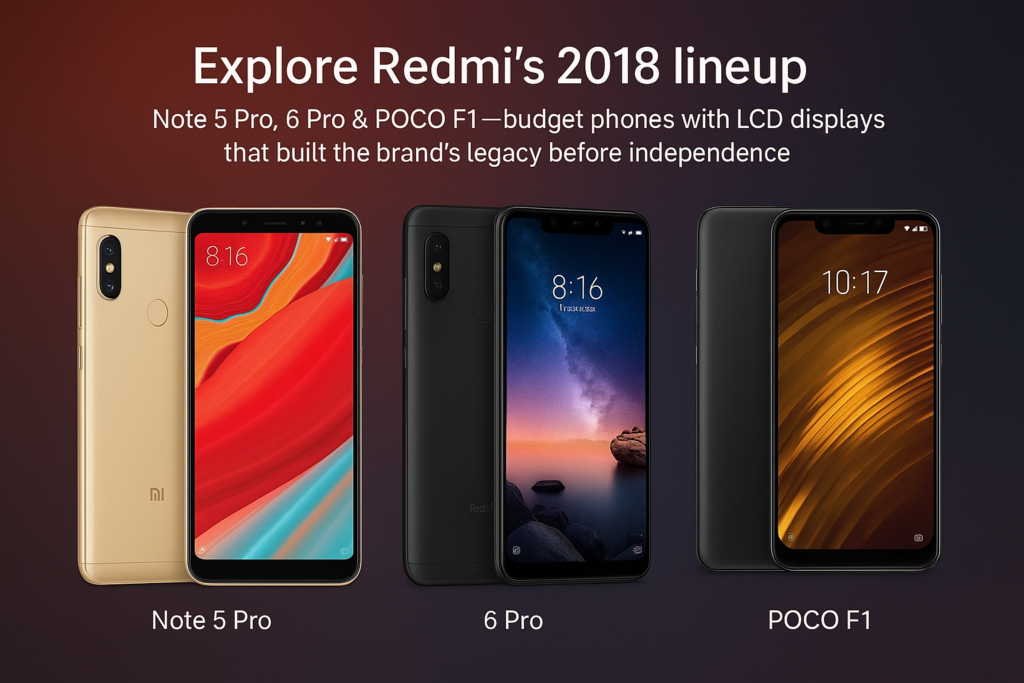
| MIC F1 (POCOFON F1) | aug 2018 | LCD | Negru Grafit, Albastru de oțel, Rosso Red |
Redmi Note 5 / Nota 5 Seria Pro
The Redmi Note 5 serie a fost superstarul global al anului 2018. A câștigat porecla de „bugetul polivalent” pentru că oferă specificații echilibrate la nivel general.
- Procesor: Snapdragon 636
- Afişa: 5.99-Ecran complet LCD inch (18:9 raportul de aspect)
- Repere: Camere duble din spate cu modul portret avansat, baterie mare, și optimizare MIUI fără probleme
- Culori: Un amestec de tonuri elegante cum ar fi Negru, Albastru, Aur, și Rose Gold
Nota 5 Pro a devenit mai ales emblematică în India, stabilirea recordurilor de vânzări și redefinirea așteptărilor medii.
Redmi 6 Serie
The Redmi 6 alinia a înlocuit Redmi de anul precedent 5 familial, concentrându-se pe accesibilitate și fiabilitatea de zi cu zi.
Redmi 6 și 6A
Ambele modele folosite procesoare MediaTek (P22 și A22) pentru a menține prețurile scăzute, oferind în același timp performanțe de încredere pentru sarcinile zilnice.
- Afişa: 5.45-LCD inch cu 18:9 raportul de aspect
- Proiecta: Compact și curbat, perfect pentru utilizare cu o singură mână
- Culori: Negru, Albastru, Aur, Aur roz
Redmi 6 Pro
The Redmi 6 Pro a fost primul telefon Redmi care a prezentat un afișaj cu crestătură, adoptarea 19:9 tendință de design popularizată de telefoanele emblematice.
- Afişa: 5.84-LCD inch cu crestătură
- Procesor: Snapdragon 625
- Culori: Negru, Albastru, Aur, Sakura roz
A devenit un succes instantaneu în rândul utilizatorilor tineri care și-au dorit un design modern fără să plătească prețuri emblematice.
Redmi S2 / Redmi Y2
Destinat iubitorilor de selfie-uri, the Redmi S2 (China) şi Redmi Y2 (India) au împărtășit specificații identice, dar branding diferit pentru fiecare piață.
- Evidențiați: 16Cameră frontală MP AI cu blitz LED moale
- Afişa: 5.99-LCD inch
- Procesor: Snapdragon 625
- Culori: Negru, Aur, Aur roz, Gri argintiu
Acest model a fost deosebit de popular în rândul femeilor tinere și al creatorilor de rețele sociale pentru atractivitatea sa centrată pe cameră.
POCO F1 – Ucigașul emblematic
The MIC F1 (sau POCOFON F1) merită o mențiune specială. În timp ce din punct de vedere tehnic sub noul sub-brand POCO al Xiaomi, a împărtășit ADN-ul Redmi de performanță la un preț imbatabil.
- Procesor: Snapdragon 845 – același cip folosit în 2018 flagship-uri
- Afişa: 6.18-LCD inch
- Culori: Negru Grafit, Albastru de oțel, și Rosso Red
A șocat industria oferind performanțe de top la jumătate din costul produselor emblematice Samsung și Apple. Era un semn clar al lucrurilor care urmau – viitorul serial Redmi K își datora o mare parte din filozofia acestei fiare.
Afișează tendințe în 2018
Fiecare 2018 Pe care sa bazat dispozitivul Redmi panouri LCD. În timp ce mulți concurenți au început să exploreze AMOLED, Redmi a păstrat lucrurile practice. LCD-urile erau durabile, accesibil, și bine înțeles de producători.
Rezultatul? Calitate constantă pentru toate modelele. Utilizatorii au afișate luminoase, contrast decent, și reproducere precisă a culorilor — ideală pentru clasa lor de preț.
Filosofia culorilor lui Redmi în 2018
2018 a fost momentul în care Redmi a început să experimenteze culori mai tinere și mai expresive. Dincolo de clasicul negru și auriu, am văzut albastru magic, roz sakura, și roșu roșu intra in lineup.
Redmi a recunoscut că telefoanele au devenit accesorii pentru stilul de viață, nu doar gadgeturi. Paleta de culori reflecta optimism, individualitate, și un strop de jucăuș – mai ales pe piețe precum India și Asia de Sud-Est.
Global vs. Variante China
În timp ce hardware-ul între globală şi versiuni pentru China a ramas asemanator, au ieșit în evidență unele diferențe subtile:
- Software: Modele globale livrate cu Google Play și MIUI Global ROM, în timp ce modelele din China aveau MIUI China fără servicii Google.
- Reglajul camerei: Stiluri de procesare ușor diferite în funcție de feedback-ul pieței.
- Opțiuni de culoare: Anumite nuanțe (ca Magic Blue) au fost exclusiv Chinei.
Aceste variații au făcut ca strategia globală a lui Redmi să fie foarte adaptabilă.
Repere strategice ale 2018
- Gamă complet LCD: Controlul costurilor a rămas rege.
- Salt de cameră: Redmi Note 5 Pro a marcat o îmbunătățire uriașă în fotografia de portret.
- Avantaj de performanță: Chiar și modelele de intrare au funcționat fără probleme datorită alegerilor inteligente ale procesoarelor.
- Evoluția designului: De la rame tradiționale la crestături, Redmi a evoluat rapid.
Împreună, aceste repere l-au pregătit pe Redmi pentru cea mai mare transformare - independența mărcii în 2019.
Cum 2018 A deschis calea pentru independența lui Redmi
a lui Redmi 2018 gama și-a arătat maturitatea. Era clar că Redmi și-a construit-o propria identitate— diferit de imaginea emblematică a Xiaomi, dar la fel de puternică ca influență.
Când Redmi a devenit oficial un brand independent la începutul anului 2019, temelia fusese deja pusă. The Nota 5, 6 Pro, şi S2 a demonstrat potențialul lui Redmi de a domina spațiul mediu la nivel mondial.
Concluzie
2018 a fost o an pivot pentru Redmi. Brandul și-a respectat principiile de bază—accesibilitatea, fiabilitate, si performanta— în timp ce experimentăm culoarea și designul. Deși fiecare telefon folosit Afișaje LCD, Inovația lui Redmi a strălucit prin optimizarea software-ului, îmbunătățirea camerei, și estetică îndrăzneață.
Moștenirea lui 2018 încă ecou în telefoanele Redmi moderne - dovadă că chiar și fără AMOLED, încă poți străluci în lumea smartphone-urilor.
Întrebări frecvente
1. De ce a folosit Redmi doar ecrane LCD 2018?
Pentru a menține prețurile scăzute și pentru a asigura o calitate constantă, Redmi a rămas cu panouri LCD pe toate modelele în acel an.
2. Care 2018 Telefonul Redmi avea cea mai bună cameră?
The Redmi Note 5 Pro a condus drumul cu configurarea camerei duble și modul portret avansat.
3. Care a fost cel mai colorat telefon Redmi 2018?
The Rosso Red de la POCO F1 şi Redmi 6 Sakura Pink de la profesionist s-au remarcat drept cele mai vibrante opțiuni.
4. A făcut vreunul 2018 Telefoanele Redmi au ecrane AMOLED?
Nu. Redmi nu a adoptat AMOLED până când 2020 cu anumite modele din seria K și Note.
5. De ce este 2018 important pentru istoria lui Redmi?
A fost ultimul an înainte ca Redmi să devină un brand independent, stabilind scena pentru succesul său viitor.