Dlaczego specyfikacje ekranu smartfona mają większe znaczenie niż kiedykolwiek 2026 Specyfikacje ekranu mają większe znaczenie niż kiedykolwiek wcześniej 2026
Jeśli się nad tym zastanowić, the ekran jest duszą smartfona. To ta część, którą dotykasz setki razy każdego dnia. Czytasz na nim wiadomości, obejrzyj filmy na ten temat, przewijaj na nim media społecznościowe, edytować na nim zdjęcia, i może nawet nad tym pracować. Nieważne, jak mocny jest procesor i ile megapikseli oferuje aparat, jeśli ekran wydaje się nudny, rozmyte, lub niewygodne do oglądania, całe doświadczenie telefonu wydaje się słabsze. Dlatego zrozumienie specyfikacji wyświetlaczy smartfonów ma większe znaczenie, niż wielu osobom się wydaje.
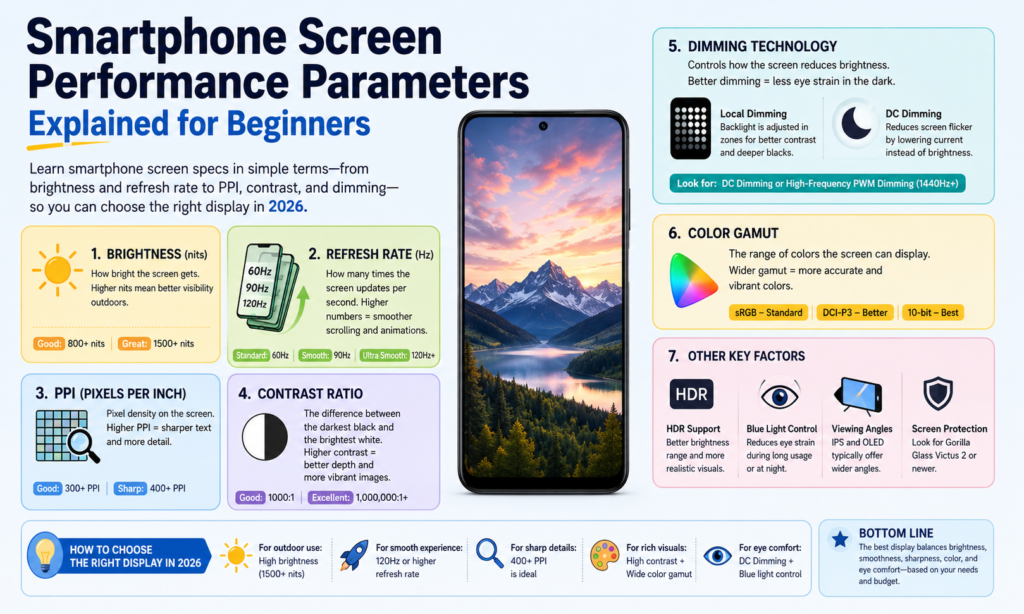
W 2026, technologia wyświetlania rozwija się szybko. Telefony premium teraz regularnie docierają 3,000+ jasność nitów, chwila 120Adaptacyjne częstotliwości odświeżania Hz stały się powszechne w urządzeniach z wyższej półki średniej. Powyżej ściemnianie PWM o wysokiej częstotliwości 2,160Hz staje się również coraz bardziej popularne, zwłaszcza we flagowym komforcie OLEDe. citeturn0search0turn0search2
Trudna część? Większość arkuszy specyfikacji podaje liczby bez wyjaśnienia, co one właściwie oznaczają. PPI, współczynnik kontrastu, częstotliwość odświeżania, gama kolorów — można odnieść wrażenie czytania w innym języku. W tym przewodniku wszystko wyjaśniono prostym językiem angielskim, niezależnie od tego, czy kupujesz nowy telefon, porównanie LCD i OLED, lub po prostu ciekawi Cię technologia wyświetlania, będziesz dokładnie wiedzieć, czego szukać.
Technologia ściemniania
Co to jest ściemnianie DC?
Ściemnianie DC dostosowuje jasność poprzez bezpośrednią zmianę prądu elektrycznego dostarczanego do wyświetlacza. Pomyśl o tym jak o powolnym odkręcaniu gałki kranu – woda płynie dalej, tylko z mniejszą siłą. Światło pozostaje ciągłe, ale jasność spada.
Dla Ekrany LCD, jasność pochodzi głównie z podświetlenia, więc zmniejszenie napięcia lub prądu obniża jasność. Dla Ekrany OLED, każdy piksel emituje własne światło, więc jasność zmienia się poprzez zmniejszenie prądu wysyłanego do poszczególnych pikseli.
Wielu użytkowników preferuje ściemnianie DC, ponieważ zapewnia stabilność wizualną. Ponieważ światło nie miga szybko i nie wyłącza się, może być łatwiejszy dla wrażliwych oczu. Jest to szczególnie ważne dla osób, które godzinami patrzą na telefon w ciemnym otoczeniu.
Kompromis polega na tym, że przyciemnianie DC może czasami wpływać na spójność kolorów przy bardzo niskiej jasności paneli OLED. Czarni mogą pozostać znakomici, ale kalibracja kolorów może się nieznacznie przesunąć w zależności od konstrukcji panelu. Producenci często starają się zrównoważyć tutaj komfort oczu i dokładność kolorów.
Co to jest ściemnianie PWM?
PWM oznacza Modulacja szerokości impulsu. Zamiast ciągłego zmniejszania mocy, wyświetlacz szybko przełącza się pomiędzy wł. → wył. → wł. → wył z dużą prędkością.
Wyobraź sobie, że włączasz światło setki lub tysiące razy na sekundę. Twoje oczy zwykle nie są w stanie bezpośrednio wykryć migotania, więc wydaje się ciemniejszy, a nie migający.
Ilość czasu, przez jaki światło pozostaje włączone w każdym cyklu, określa jasność:
- Dłuższy czas włączenia = jaśniejszy ekran
- Krótszy czas włączenia = przyciemniony ekran
PWM jest niezwykle powszechny w smartfonach OLED.
W 2026, flagowe telefony z Androidem coraz częściej się reklamują 2,160Przyciemnianie PWM od Hz do 3840 Hz, czyli znacznie więcej niż w starszych implementacjach 240–480 Hz. Użytkownicy tendany PWM o wyższej częstotliwości. citeturn0search8turn0search6
Który jest lepszy dla komfortu oczu?
Nie ma uniwersalnej odpowiedzi, ponieważ ludzkie oczy są cudownie skomplikowane.
Niektórzy użytkownicy w ogóle nie zauważają migotania PWM. Inni odczuwają po tym bóle głowy 10 protokół.
Ogólnie:
| Technologia | Główna zaleta | Główna wada |
|---|---|---|
| Ściemnianie DC | Mniej widoczne migotanie, często mniej męczące dla oczu | Może nieznacznie wpływać na jakość kolorów OLED |
| Ściemnianie PWM | Lepsza kontrola jasności i spójność kolorów | Może powodować zmęczenie oczu u wrażliwych użytkowników |
Jeśli jesteś wrażliwy na migotanie ekranu, Ściemnianie DC Lub PWM wysokiej częstotliwości warto nadać priorytet.
Wydajność kolorów
Nasycenie
Nasycenie opisuje, jak bogaty i czysty wydaje się kolor.
Wysoce nasycone kolory sprawiają wrażenie żywych i wyrazistych. Niskie nasycenie sprawia wrażenie przytłumionego lub wyblakłego.
Pomyśl o dojrzałej czerwonej truskawki i wyblakłej różowej koszuli pozostawionej zbyt długo na słońcu. Ta sama rodzina kolorów – bardzo różna intensywność.
Panele OLED często sprawiają wrażenie bardziej nasyconych, ponieważ każdy piksel niezależnie emituje własne światło.
Niektórzy uwielbiają efekt „wow”.. Inni wolą bardziej naturalne kolory do edycji zdjęć.
Gama kolorów
Gama kolorów odnosi się do całkowitego zakresu kolorów, jakie może wyświetlić ekran.
Szersza gama kolorów oznacza, że wyświetlacz może odtworzyć więcej odcieni.
Typowe standardy obejmują:
- sRGB
- DCI-P3
- AdobeRGB
- BT.2020
W smartfonach, DCI-P3 jest obecnie bardzo powszechne w wyświetlaczach premium.
Najnowsze koncepcje wyświetlaczy firmy Samsung zaprezentowane podczas SID Display Week 2026 wykazał do 96% Zasięg BT.2020, podczas wyświetlania. citeturn0news16turn0news17
Dokładność kolorów
Dokładność koloru mierzy stopień zbliżenia wyświetlanego koloru do zamierzonego koloru oryginalnego.
To ma duże znaczenie:
- fotografowie
- redaktorzy wideo
- projektanci
- sprzedawcy internetowi pokazujący kolory produktów
Jeśli biały obraz wydaje się żółtawy, a czerwone zdjęcie produktu wygląda na pomarańczowe, dokładność kolorów jest słaba.
Typowym pomiarem jest tutaj Delta E.
Niższa Delta E = dokładniejsze odwzorowanie kolorów.
Skala szarości
Skala szarości odnosi się do poziomów jasności pomiędzy czernią i bielą.
Dobra wydajność skali szarości oznacza płynne przejścia.
Słaba skala szarości tworzy widoczne pasy lub nierówne cieniowanie.
Staje się to bardzo zauważalne podczas oglądania ciemnych filmów lub oglądania zdjęć przy słabym oświetleniu.
Jasność i kontrast
Wyjaśnienie jasności
Jasność mierzy się w gnidy.
Wyższe gnidy = jaśniejszy wyświetlacz.
Dlaczego to ma znaczenie?
Ponieważ światło słoneczne istnieje.
Telefon może wyglądać idealnie w pomieszczeniu, ale na zewnątrz może stać się nieczytelny.
Flagowe smartfony w 2026 powszechnie docierają 3,000– Jasność szczytowa 3500 nitów. Na przykład, OnePlusa 15 jest zgłaszane około 3,500 gnidy, podczas gdy Pixe jest w pobliżu 3,300 gnidy. citeturn0search2
Wyjaśniono współczynnik kontrastu
Współczynnik kontrastu to różnica pomiędzy:
najjaśniejsza biel ÷ najciemniejsza czerń
Tworzy się wyższy kontrast:
- głębsza czerń
- mocniejsze akcenty
- lepszy HDR
- bogatsza głębia obrazu
Dominuje tutaj OLED, bo piksele potrafią się całkowicie wyłączyć.
To tworzy prawdziwą czerń.
LCD nie może całkowicie wyłączyć podświetlenia w ten sam sposób.
Dlatego użytkownicy ekranów OLED często mają ochotę patrzeć w ciemne nocne niebo.
Jasność i ostrość
Rezolucja (DPI)
Rozdzielczość odnosi się do liczby pikseli w poziomie i w pionie.
Przykłady:
- 1080 × 2400
- 1440 × 3200
Więcej pikseli = więcej szczegółów.
Chociaż poza pewnym punktem, różnica staje się trudniejsza do zauważenia przy normalnej odległości oglądania.
Gęstość pikseli (PPI)
PPI oznacza pikseli na cal.
Informuje o tym, jak ciasno upakowane są piksele.
Wyższe PPI = ostrzejszy tekst i czystsze krawędzie.
Przykłady:
| Typ wyświetlacza | Typowy PPI |
|---|---|
| Budżetowy LCD | 300–400 |
| OLED średniej klasy | 400–460 |
| Flagowy model OLED-owy | 450–550+ |
Powyżej mniej więcej 450 PPI, tekst zwykle wygląda jak brzytwa.
Rozstaw pikseli
Rozstaw pikseli to odległość pomiędzy sąsiednimi pikselami.
Mniejszy rozstaw pikseli = wyższa ostrość.
Mniejsze odstępy między pikselami sprawiają, że obrazy wydają się bardziej płynne i dopracowane.
Ruch i responsywność
Czas reakcji
Czas reakcji mierzy, jak szybko piksel zmienia się z jednego stanu w drugi.
Często opisywany jako:
Czarny → Biały → Czarny
Krótszy czas reakcji pomaga zmniejszyć:
- duchy
- plama
- smarowanie
Szczególnie zauważalne podczas grania lub szybkiego odtwarzania wideo.
Częstotliwość odświeżania
Częstotliwość odświeżania = ile razy wyświetlacz jest odświeżany na sekundę.
Mierzone w Hz.
Przykłady:
- 60Hz
- 90Hz
- 120Hz
- 144Hz
A 120Wyświetlacz Hz odświeża dwukrotnie częściej niż 60 Hz.
Dzięki temu przewijanie jest płynniejsze, a animacje bardziej płynne.
Gdy regularnie korzystasz z częstotliwości 120 Hz, powrót do 60 Hz może przypominać chodzenie po mokrym piasku.
Inne ważne czynniki wyświetlania
Kąt widzenia
Kąt widzenia oznacza, jak dobrze nadal widzisz wyświetlacz z boku.
Utrzymują dobre kąty widzenia:
- jasność
- kolor
- kontrast
OLED zwykle radzi sobie tutaj lepiej niż LCD.
Zużycie energii
Wyświetlacze zużywają większą część czasu pracy baterii smartfona.
OLED może być bardziej wydajny w trybie ciemnym, ponieważ czarne piksele mogą zostać całkowicie wyłączone.
Podświetlenie LCD pozostaje włączone w sposób ciągły.
Dlatego tryb ciemny może oszczędzać baterię na urządzeniach OLED.
Promieniowanie elektromagnetyczne
Wyświetlacze emitują energię poprzez pola elektryczne i magnetyczne, a także światło widzialne i ciepło.
Do normalnego użytkowania smartfona, pozostaje to w ramach standardów bezpieczeństwa elektroniki użytkowej.
To, co użytkownicy zwykle zauważają bardziej praktycznie, to:
- ekspozycja na światło niebieskie
- zmęczenie oczu
- wytwarzanie ciepła
a nie samo promieniowanie elektromagnetyczne.
Jak wybrać odpowiedni ekran smartfona w zależności od potrzeb
Wybór wyświetlacza smartfona jest jak wybór pary okularów. To „najlepszy” zależy od Ciebie.
Jeśli zależy Ci najbardziej oglądanie filmów, priorytetyzować:
- OLED
- wysoki kontrast
- HDR
- wysoka jasność
Jeśli jesteś gracz mobilny, skupić się na:
- 120Hz+
- szybki czas reakcji
- próbkowanie o wysokim dotyku
Jeśli jesteś wrażliwy na zmęczenie oczu:
- Ściemnianie DC
- PWM wysokiej częstotliwości
- ustawienia komfortu oczu
Jeśli bateria ma największe znaczenie:
- LTPO JESTEŚ
- adaptacyjna częstotliwość odświeżania
- efektywne zarządzanie jasnością
Nie goń za każdą liczbą.
Szukaj numerów pasujących do sposobu, w jaki faktycznie korzystasz z telefonu.
Wniosek
Wyświetlacze smartfonów to już nie tylko świecące prostokąty. To drzwi wejściowe do całego Twojego cyfrowego życia.
Zrozumienie Ściemnianie DC, PWM, nasycenie, współczynnik kontrastu, rezolucja, PPI, częstotliwość odświeżania, czas reakcji, gama kolorów, I zużycie energii pomaga czytać poza marketingiem.
Jaśniejszy ekran nie zawsze jest lepszy.
Wyższa częstotliwość odświeżania nie zawsze jest konieczna.
Szersza gama kolorów nie jest przydatna, jeśli dokładność kolorów jest słaba.
Najlepszy ekran smartfona to taki, który sprawia wrażenie łatwego przy każdym odblokowaniu telefonu.
A kiedy już wiesz, co naprawdę oznaczają te specyfikacje, wybór tego ekranu staje się znacznie łatwiejszy.
FAQ
1. Co jest lepsze dla oczu: Ściemnianie DC lub ściemnianie PWM?
Dla wielu użytkowników wrażliwych na migotanie, Ściemnianie DC czuje się bardziej komfortowo. PWM o wysokiej częstotliwości może być również wygodny w zależności od czułości.
2. Czy wyższe PPI jest zawsze lepsze?
Nie zawsze. Powyżej około 450–500 PPI, różnice stają się trudniejsze do zauważenia podczas normalnego użytkowania.
3. Czy OLED jest lepszy od LCD??
OLED zazwyczaj oferuje lepszy kontrast, głębsza czerń, i bogatszy kolor. Wyświetlacz LCD może nadal oferować doskonałą jasność i często pozwala uniknąć problemów związanych z migotaniem OLED.
4. Czy warto używać 120 Hz w smartfonie??
Tak — zwłaszcza jeśli często grasz lub przewijasz. Płynniejszy ruch jest bardzo zauważalny.
5. Która specyfikacja ekranu ma największe znaczenie?
Nie ma jednej odpowiedzi. Dla większości ludzi, największy codzienny wpływ pochodzi z:
- jasność
- częstotliwość odświeżania
- kontrast
- komfort oczu