
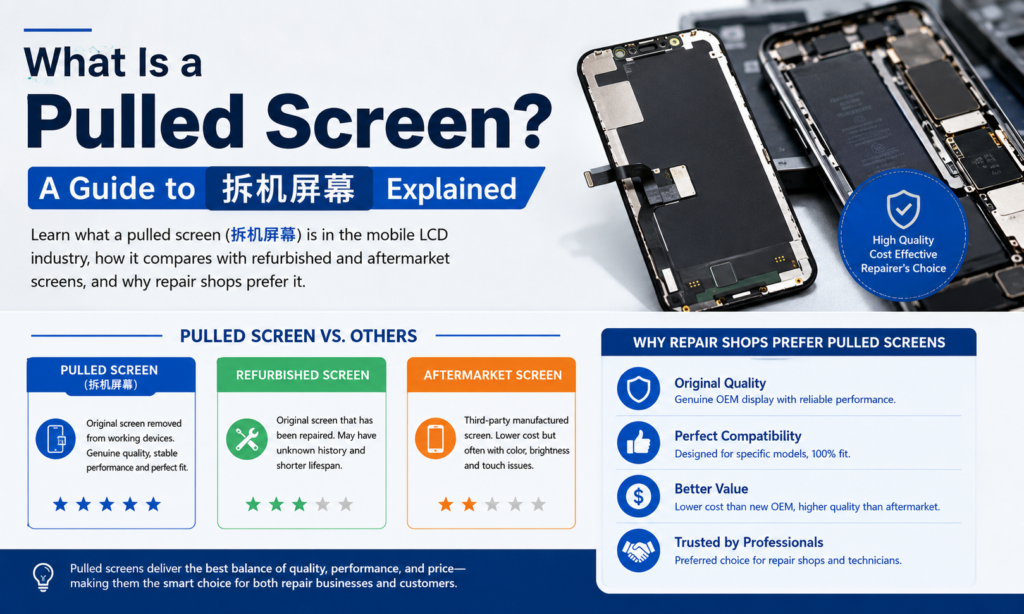
A Teardown Screen jelentésének megértése
Ha bármilyen időt töltött a mobiltelefon-javító gyárakban, nagykereskedelmi alkatrészpiacok, vagy javítóműhelyek pultjai Shenzhenben, Guangzhou, vagy akár online B2B platformokon, jó eséllyel hallottad ezt a kifejezést "Lebontó képernyő" sokat dobálják. Szó szerint lefordítva kínaiból, azt jelenti "szétszerelt képernyő"– de a mobilmegjelenítési iparágban, a legtöbben a húzott képernyő.
Tehát mi is ez pontosan?
A húzott képernyő egy Az eredeti okostelefon-kijelző eltávolítva egy használt vagy sérült telefonról. Lehet, hogy magának a telefonnak az alaplapja sérült, akkumulátor problémák, lakáskár, vagy egyéb, a képernyővel nem kapcsolatos problémák, míg a kijelző használható maradt. A technikusok óvatosan távolítják el az eredeti kijelzőegységet, teszteld le, osztályozza azt, és értékesítse tovább a javítási piacon.
Gondoljon erre úgy, mint egy teljesen jó motor kimentésére egy összetört autóból. A jármű összeadható, de a motor így is szépen jár. Lényegében ez a húzott képernyő. A képernyő már egy életet leélt egy telefonban, eltávolították, és most kap egy második életet egy másik javítás során.
Ez a kifejezés különösen elterjedt Kínában, mivel Kína a világ egyik legnagyobb központja okostelefon felújítás, kijelző újrahasznosítása, és cserealkatrészek forgalmazása. A javítóműhelyek gyakran kategóriákra osztják a képernyőket, mint pl:
| Képernyő típusa | Jelentése | Eredeti gyártói alkatrész | Állapot |
|---|---|---|---|
| Húzott képernyő (Szétszerelő képernyő) | Eltávolították a használt telefonról | Igen | Használt |
| Felújított képernyő | Eredeti panel cserélt üveggel | Igen | Javítva |
| OEM új képernyő | Gyári új eredeti | Igen | Új |
| Utángyártott képernyő | Harmadik fél másolata | Nem | Új |
Ez a megkülönböztetés többet számít, mint azt sok vásárló gondolná.
Miért gyakori ez a kifejezés a kínai telefonjavító iparágban?
A kínai mobiljavítási ökoszisztéma hihetetlenül gyorsan fejlődik. Évente több millió sérült okostelefon kerül az újrahasznosítási és felújítási csatornákra. Néhányuk donoreszközzé válik. A többit újrafelhasználható alkatrészekké bontják.
A kijelzők a legértékesebb alkatrészek közé tartoznak.
Mivel a modern okostelefon-képernyők drágák – különösen az OLED-panelek –, ezek helyreállítása gazdaságilag ésszerű. Egy repedt hátú iPhone működő OLED kijelzővel továbbra is jelentős értéket képvisel. Ahelyett, hogy leselejtezné, a nagykereskedők visszaszerzik a képernyőt és eladják.
Ezért vált a „拆机屏” olyan szabványos iparági nyelvvé.
Húzott képernyő vs felújított képernyő vs utángyártott képernyő
Az emberek gyakran összekeverik ezeket.
A húzott képernyő eredeti és érintetlen, egyszerűen eltávolították egy másik telefonról.
A felújított képernyő általában azt jelenti, hogy az eredeti OLED- vagy LCD-panelt megőrizték, de a törött felső üveget laminálással és felújítással pótolták.
An utángyártott képernyő harmadik fél gyártója újonnan gyártotta, és nem eredeti a márkától.
Ez a különbség mindent megváltoztat – a fényerőtől az érintésre adott válaszon át a színpontosságig.
Honnan származnak a húzott képernyők
A húzott képernyők varázsütésre nem jelennek meg a raktárakban. Meglepően nagy és kifinomult másodlagos eszközellátási láncból származnak.
Használt telefonokból mentve
A leggyakoribb forrás a donor telefonok.
Ezek az eszközök rendelkezhetnek:
- halott alaplapok
- vízkár
- sérült töltési IC
- hajlított keretek
- rossz akkumulátorok
- lezárt eszközök
- szolgáltatói feketelista problémák
De a képernyő továbbra is működik.
A technikusok szétválasztják a kijelzőt, futtasson funkcionális tesztelést, és ha átmegy az ellenőrzésen, leltárba kerül.
A csere- és felújítási csatornákból helyreállt
A felújított okostelefonok piaca folyamatosan növekszik világszerte.
A Counterpoint Research jelentése szerint a felújított okostelefonok globális piaca nőtt 5% évről évre be 2024, az Apple növelte részesedését a 56%.
Ez a növekedés közvetlenül a húzott képernyős piacra táplálkozik.
A több csere azt jelenti, hogy több használt telefon kerül a feldolgozóközpontokba. A több használt telefon több helyreállítható eredeti kijelzőt jelent.
Iparági elemzők becslése szerint az előre tulajdonolt okostelefonok piaca is kb $83 milliárd bevételben mostanában, egyre értékesebbé téve az újrafelhasznált alkatrészeket.
Miért részesítik előnyben a javítóműhelyek a húzott paravánokat?
Eredeti kijelző minőség
Ez a legnagyobb ok.
A húzott képernyő továbbra is a márka eredeti kijelzője.
Ez azt jelenti:
- eredeti fényerő
- eredeti OLED kontraszt
- gyári színkalibráció
- natív frissítési viselkedés
- eredeti touch IC
- helyes szenzorkivágásokat
- megfelelő keretméret
Sok utángyártott alternatívával összehasonlítva, a különbség éjjel és nappal érezhető.
Egy olcsó utángyártott LCD-n gyakran olyan érzés, mintha tömörített MP3-at hallgatnánk. A kihúzott eredeti képernyő olyan, mintha a stúdiómestert hallgatná.
Azonnal észreveszed.
Jobb kompatibilitás a Face ID-vel, ujjlenyomat, és érintse meg
A kompatibilitás egy másik jelentős előny.
A modern kijelzők mélyen integráltak szoftverrel és hardverrel:
- Face ID flex igazítás
- kijelző alatti ujjlenyomat-érzékelők
- környezeti fényérzékelő ablakok
- True Tone kalibrálás
- érintővezérlő firmware
Az eredeti húzott képernyő használata csökkenti a kompatibilitási meglepetéseket.
A javítóközösségek továbbra is arról számolnak be, hogy az eredeti vagy húzott képernyők általában kiszámíthatóbban viselkednek, mint az alacsony költségű utángyártott cserék, különösen az OLED zászlóshajó modelleken.
Húzott képernyők minőségi osztályozása
Nem minden húzott képernyő egyenlő.
A beszállítók ezért minősítik őket.
A-osztályú
Általában azt jelenti:
- nincs karc vagy nagyon kis kopás
- nincsenek halott pixelek
- nincs beégés
- teljes érintés funkció
- kiváló kozmetikai megjelenés
Ezek prémium árat írnak elő.
B fokozatú
Tartalmazhat:
- könnyű karcolások
- kisebb nyomásnyomok
- apró kozmetikai viselet
A funkcionalitás továbbra is jó.
Beégett vagy kisebb hibás képernyők
Az OLED beégés gyakori.
Főleg azzal:
- állapotsor árnyékai
- billentyűzet szellemkép
- TikTok UI égés
- navigációs sáv megtartása
Ezeket olcsóbban adják el, és gyakran olcsó felújítási eszközökbe kerülnek.
Mindig kérdezze meg a beszállítókat:
- beégett fotók fehér alapon
- fekete képernyő teszt
- érintőrács teszt
- fényerő teszt
- True Tone vagy ujjlenyomat-ellenőrzés
Húzott képernyő vs új OEM képernyő
Egy vadonatúj OEM-képernyő ideális – de drága.
A húzott képernyők az árkülönbség miatt léteznek.
| Funkció | Húzott képernyő | OEM új képernyő |
|---|---|---|
| Eredeti gyártói alkatrész | Igen | Igen |
| Korábban használt | Igen | Nem |
| Ár | Alacsonyabb | Magasabb |
| Kozmetikai viselet | Lehetséges | Egyik sem |
| Teljesítmény | Nagyon közel az eredetihez | Eredeti |
Sok javítóműhely számára, a választás a közgazdaságtanon múlik.
Ha az OEM új költségek $150 és egy tesztelt húzott képernyő kerül $95, sok vásárló a húzott opciót választja.
Húzott képernyő vs utángyártott LCD
Ez az összehasonlítás az, ahol a dolgok érdekessé válnak.
Fényesség, szín, és érintési teljesítmény
Az utángyártott képernyők vadul változhatnak.
Némelyik tisztességes.
Néhányan szörnyűek.
A legújabb javítási iparági vásárlási útmutatók megjegyzik, hogy az utángyártott OLED-ek gyakran durván teljesítenek 85-90%-os színpontosság az eredeti kijelzőkkel szemben, míg az alacsonyabb kategóriájú csereLCD-k a minőségi szinttől függően sokkal lejjebb eshetnek.
A gyakori különbségek közé tartozik:
- alacsonyabb fényerő
- hidegebb fehérek
- szegényebb feketék
- vastagabb keretek
- késleltetett érintés
- csökkentett frissítési simaság
A kihúzott eredeti képernyők általában felülmúlják őket.
Hosszú távú tartósság
A tartósság kedvez a húzott képernyőknek is.
Miért?
Mert az eredeti panelt kifejezetten erre a telefonra tervezte a gyártó.
Az utángyártott alkatrészek néha csökkentik a költségeket:
- üveg szilárdsága
- flex kábel minőség
- ragasztók
- IC minőség
Ez nem jelenti azt, hogy minden utángyártott képernyő rossz.
A következetességet azonban nehezebb garantálni.
Kockázatok, amelyeket a vásárlóknak tudniuk kell vásárlás előtt
A húzott képernyők kiválóak – de nem kockázatmentesek.
Rejtett sérülés és beégés
A lehetséges problémák közé tartozik:
- OLED beégés
- érintse meg az elhalt pontokat
- felemelt keret
- legyengült flex
- előzetes javítási sérülés
- nyomásnyomok
A jó beszállítók nyilvánosságra hozzák ezeket.
A rossz beszállítók nem.
Szállítói megbízhatóság
Ez szinte többet számít, mint maga a képernyő.
Vásároljon olyan szállítóktól, akik biztosítják:
- QC videók
- garancia
- visszaküldési politika
- osztályozási szabványok
- valódi fotók
- sorozatos címkézés
Anélkül, húzott képernyők vásárlása olyan érzés lehet, mint rejtélyes dobozok vásárlása.
És senki sem szereti a drága meglepetéseket.
Hogyan lehet azonosítani a kiváló minőségű húzott képernyőt
Íme egy gyakorlati ellenőrző lista, amelyet a vásárlók használnak.
Ellenőrző lista
Vásárlás előtt:
- ellenőrizze a modellszámot
- tesztelje a fényerő egyenletességét
- ellenőrizze az elhalt pixeleket
- vizsgálja meg a flex kábelt
- ellenőrizze a csatlakozó érintkezőit
- tesztelje az érintést a teljes panelen
- ellenőrizze az OLED beégését a fehér képernyőn
- inspect scratches under direct light
- verify Face ID or fingerprint compatibility
- request warranty terms
Ha lehet, ask for video testing.
A quick test video often tells more than ten product photos.
Market Trends in 2025–2026 for Pulled Smartphone Screens
The pulled-screen business is riding a larger industry wave.
Consumers are keeping phones longer.
Repairing instead of replacing.
Buying refurbished instead of new.
That shifts demand toward reusable original parts.
Industry data shows global refurbished smartphone sales continued rising into 2025, growing around 3–5% year-over-year, even while new-device growth remained slower in many markets.
That trend supports demand for:
- húzott képernyők
- original housings
- used camera modules
- reclaimed batteries
- felújított kijelzők
Sustainability plays a role too.
A reused screen means:
- less e-waste
- lower manufacturing demand
- alacsonyabb javítási költség
- hosszabb a készülék élettartama
Sokféleképpen, húzott képernyők ülnek közvetlenül a kereszteződésben javíthatóság, megfizethetőség, és a fenntarthatóság.
Következtetés
A kifejezés "Lebontó képernyő", vagy húzott képernyő, az egyik legfontosabb koncepció az okostelefon-javító kijelzőiparban.
Papíron egyszerű: egy másik eszközről eltávolított eredeti kijelzőt.
De a gyakorlatban, a javítás köré épülő hatalmas globális ökoszisztémát képviseli, újrafelhasználás, és meghosszabbítja az elektronika élettartamát.
Javítóműhelyek számára, húzott paravánok kínálnak édes helyet között ár és minőség.
Az ügyfelek számára, gyakran jobb megtekintési élményt nyújtanak, mint az olcsóbb utángyártott példányok.
Az ipar számára, segítenek abban, hogy több millió kijelző ne kerüljön a szemétlerakókba, és ne kerüljön vissza az emberek kezébe.
Ha csere okostelefon-képernyőt vásárol – különösen iPhone-hoz, Samsung, vagy más prémium modellek – ha megértjük, mi a húzott képernyő, pénzt takaríthatunk meg, javítja a javítás minőségét, és segít elkerülni, hogy rossz alkatrészt vásároljon.
És néha, a legjobb képernyő nem a legújabb.
Ez az eredeti kap egy második esélyt.
GYIK
1. Eredeti húzott képernyős?
Igen. A húzott képernyő egy eredeti gyártó képernyője eltávolítva egy használt készülékről.
2. A húzott képernyő jobb, mint egy utángyártott képernyő?
Általában igen. A húzott képernyők általában jobb fényerőt biztosítanak, szín, és érintési teljesítmény, mert eredetiek.
3. A kihúzott képernyő azt jelenti, hogy megjavították??
Nem feltétlenül. Lehet, hogy egyszerűen eltávolították egy másik telefonról. Ez különbözik egy felújított képernyőtől.
4. A kihúzott képernyők beéghetnek?
Igen. Főleg az OLED húzott képernyők. Vásárlás előtt mindig ellenőrizze.
5. Miért olcsóbbak a húzott képernyők, mint az új OEM képernyők??
Mert használják. Annak ellenére, hogy eredetiek, korábbi használat csökkenti a viszonteladási árat.



